Showing posts with label book review. Show all posts

Thursday, 18 February 2016

Automated Alice - Jeff Noon

Automated Alice is essentially Alice's Adventures in Wonderland in a cyberpunk universe. A little Victorian girl named Alice is bored with her humdrum existence, and is transported through a grandfather clock to the future, or at least to 1998, which was the future in 1996 when the novel was published. Once there she meets her Twin Twister, a life-size embodiment of her favourite doll Celia, who has been animated by an inventor and joins Alice on her quest to get home.

Alice is under suspicion for the famous Jigsaw Murders, in which the victims are found dismembered and stitched together in a nonsensical fashion. They are found with one jigsaw piece each, all of which are missing from Alice's jigsaw puzzle in the past. She and Celia decide that the only way to get home is to retrieve all of the missing puzzle pieces, while evading the clutches of the police.

In many ways Automated Alice feels like it ought to be a children's book – it's told in a matter-of-fact, childlike voice and even has wonderfully quirky full-page illustrations, as well as smaller doodles throughout. There are aspects, however, like the practical but detailed way in which the murder victims are described, that would be very much out of place in a children's book. Noon keeps the dreamlike feel of Carroll's original and applies it to his own, more modern universe found in Vurt and Pollen (and later Nymphomation) to create a very readable, but very unsettling, atmosphere.

The novel questions the boundaries of fantasy and reality in a way I'm sure Carroll would have approved of. Alice meets an authorial figure, Zenith O'Clock, who has a very existential conversation with her questioning whether she represents the Alice known in real life by Carroll, the Alice in the book he wrote, or another Alice entirely. A cameo appearance by Lewis Carroll himself increases the blurring of lines.

For those who have read Noon's other novels, Automated Alice offers some interesting theories about the background to the culture he's created which set Vurt, Pollen and Nymphomation in a different light.


Next up: The Masqueraders by Georgette Heyer

Wednesday, 17 February 2016

A Trail of Ink - Mel Starr

The third novel in the medieval mystery Hugh de Singleton series focuses on the mysterious theft of his friend John Wycliffe's entire collection of books. His investigations lead him to several different groups of possible suspects, and to multiple attempts on his life as he tries to uncover the truth and retrieve the books. At the same time, he must try to win his beloved Kate from the latest of her persistent suitors.

Like the previous novels, A Trail of Ink is so rich in detail, especially in little everyday things like food, clothes or furnishings. This gives a real depth to the story and makes it more than just a mystery set in the past. Starr blends intrigue, action and comedy together to create a very readable novel that really brings the period alive.

Next up: Automated Alice by Jeff Noon

Friday, 8 January 2016

Bonus review: And Then There Were None by Agatha Christie

I've had quite a few Agatha Christies on my bookshelf patiently waiting their turn to be read, but when I noticed the new BBC adaptation of And Then There Were None over the Christmas period I wanted to read the book before watching it.

The premise is pretty well-known: 10 people go to a house on an isolated island, and are killed one by one until they are all dead. In a foreword Christie herself comments on how challenging it was to think up a way to do this, and it really is a very clever and surprising solution.

This is one of the least cosy Christie novels I've read – usually the investigating figure, whoever they may be, is not personally involved in the murder and feels pretty safe in themselves. In And Then There Were None, however, the narrative viewpoint shifts between each of the characters as they become increasingly more aware of their own inevitable demise, which lends the story an unusually serious edge, more like a psychological horror than a comfortable murder-mystery.

The tone remains very grounded and British however, and Christie does a great job creating a variety of distinct but convincing narrative voices. In spite of the fact that they all have quite serious flaws, many of them are likable enough for me to have wished they didn't have to die.

One of Agatha Christie's best-known novels, and well worth a read.


Monday, 21 December 2015

Furiously Happy - Jenny Lawson

I only just remembered that I completely forgot to post a review for this book when I finished it last month! Normally I'm quite good, but I must have been pretty distracted at that point.

Furiously Happy is the second of Jenny Lawson's memoirs. The first, Let's Pretend This Never Happened, is more of your usual autobiography, i.e. an account of the author's life to date, although Jenny Lawson's life is far from average and much of it reads more like a surreal comedy than an autobiography.

Furiously Happy is more of a selection of anecdotes, vaguely arranged by theme. Lawson manages to make her experiences with mental illness hilarious, bizarre and often very touching at the same time. From travelling Australia in a kangaroo onesie to being chased down the road by swans (thinking about it, many of the stories are animal-related in some way, shape or form), Lawson's stories are unexpected and very original.

Of course the core theme of the book is at heart very serious. I'm sure everyone out there has times when they feel depressed, slightly unhinged or just plain wrong, even those who aren't diagnosed with any kind of mental illness, and Lawson's central message behind all of this is that you aren't alone in this.

This is a very candid, warm and open account of her own experiences, which is very funny in itself and behind the humour holds a complex and comforting message to the reader.


Next up: Kristin Lavransdatter by Sigrid Undset


Sunday, 20 December 2015

Bonus review: Gone Girl by Gillian Flynn

As my other books at the moment are a bit on the long, heavy side, I took some time out to read Gone Girl to break things up a bit.

Nick and Amy Dunne, a recently out-of-work couple from New York, have moved to Nick's much smaller hometown of North Carthage, Missouri, where Nick opens a bar with his twin sister Go. One day he returns home to find his wife unexpectedly missing, and his life is suddenly invaded by police investigations and harassing media.

The story is told in chapters that alternate between Nick's present-day experiences and diary entries written by Amy, and through these a picture builds up of the couple's turbulent relationship beneath their appearance of public normality. Both are flawed individuals with moments (or more than moments) of narrative in which they are unlikable but at the same time very relatable, and the alternating accounts of events by Nick and Amy build up and then strip away layers of deception and conflict.

While I wouldn't necessarily have chosen this novel myself from the blurb (it came recommended and lent by someone at work), it was actually a fascinating and gripping read, and highly original and unexpected.

Gone Girl is definitely worth reading, even if, like me, you prefer more of a plot-based story – trust me, you won't be disappointed.


Next up: Kristin Lavransdatter by Sigrid Undset

Saturday, 7 November 2015

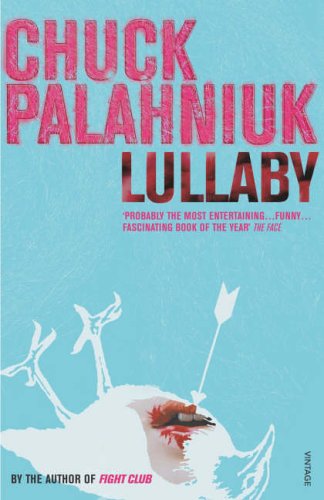
Lullaby - Chuck Palahniuk

Reporter Carl Streator has been assigned to investigating Sudden Infant Death Syndrome for his newspaper, and notices a pattern in all the scenes he's been called to see. At every single one of them, a poetry anthology is, or has been, open at page 27 on an old African culling song. To confirm this theory, he reads the poem to his editor, who fails to come in to work the following day. However, we discover that this is also a very personal quest for Streator – he accidentally caused the death of his own wife and child 20 years earlier by reading them the very same poem.

Occult real estate agent Helen Hoover Boyle (who specialises in selling haunted houses and profiting by the frequent sales commissions as clients are keen to get rid of them again very quickly), has come to the same conclusion as Streator through her own investigations. The pair, along with Helen's secretary Mona and Mona's hippie boyfriend Oyster, race to destroy the remaining 200 copies of a limited edition print, before the poem becomes public knowledge.

Lullaby is at once disturbing, gripping and surprisingly funny in a bizarre, cynical kind of way. Palahniuk explores the different temptations for people with an inhuman power, the power to kill anyone they want to, instantly, with no more than a thought or a few words. How it changes the characters and the ways they cope with it forms a fascinating part of the story.

The brusque, matter-of-fact narrative tone lends a poignancy to grief, and a sense of detachment to several rather gory scenes, and the characters are colourful and eccentric in a manner more usually found in comedic novels.

Lullaby is a fascinating, dark but sometimes very funny exploration of the power of language and of the corruption of power. Very much worth reading, and I can guarantee you'll never have read anything like it before.


Next up: Furiously Happy by Jenny Lawson

Thursday, 5 November 2015

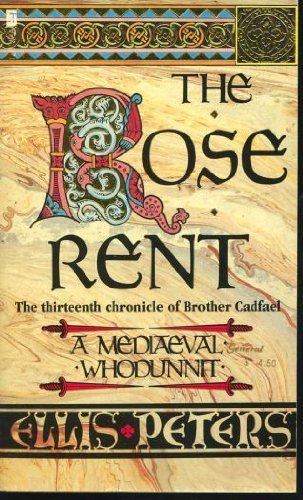
The Rose Rent - Ellis Peters

The thirteenth Cadfael novel, The Rose Rent, is a little bit more than a detective story. Young widow Judith Perle, who rents property to the abbey for the token price of a single rose delivered on the same day once every year, goes missing a couple of days before this rent is due, following the mysterious near-destruction of the rose bush in question. As the sheriff and the abbey are well aware, failed payment of this rent, would legally result in the property defaulting back to Mistress Perle, and puts suspicion on some of her would-be suitors would might aspire to own it themselves.

Ellis Peters uses more of an open style of narration than usual in this novel, and we see events from a diverse range of points of view. With an ingenuity worthy of Agatha Christie, this is cleverly used to hide facts in plain sight and to bring about a genuinely surprising ending.

The main point of this novel, for me, wasn't simply solving the original murder of a young monk found dead after defending the unlucky rose bush. It was more an exploration of grief and love, seeing the young widow begin to stop mourning her first husband and starting to move on with her life, and we see a wide selection of suitors each with their own agenda, all eager to marry into the prosperous business Judith has inherited.

Overall this novel felt more sophisticated as a plot than many of the preceding ones, and had an emotional complexity that really made it come alive.


Next up: Lullaby by Chuck Palahniuk

Thursday, 22 October 2015

Nymphomation - Jeff Noon

Nymphomation is Jeff Noon's fourth novel, and acts as a prequel to Vurt and then Pollen.

Set in 1999 Manchester, it offers a futuristic alternative view of a familiar unglamorous city, in which a trial lottery game called Domino Bones is being held. Along with the weekly domino draws, in which only one person can win the grand prize, AnnoDomino have created flying advertisements which buzz around the city, interbreeding and multiplying. As the city's obsession with with Domino Bones grows, a group of rogue mathematicians suspect that the game is not what it seems and try to break into the system.

Noon tells the story in quick scenes, sometimes no more than snapshots, that tell us almost enough but never too much, and keep you reading as you try to discover more. The characters and setting are drawn briefly but effectively, often using random-seeming and exaggerated language that lends the novel a lurid, unreal quality. Mathematics and the science of chance are blurred with fantasy to form an intriguing universe in which anything is possible.

This novel is a very human experience of something inhuman, while also managing to be extremely thought-provoking and at times sinister and unnerving. At first I didn't realise it linked up to the other books in the series, and by the end it had set the scene for the development into Vurt and made me want to reread that with fresh eyes again.

There's only one I haven't yet read in the series, Automated Alice, and I'll definitely be asking for that for Christmas.


Next up: The Rose Rent by Ellis Peters

Saturday, 17 October 2015

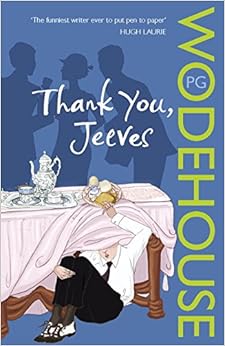
Thank You, Jeeves - PG Wodehouse

This is the first of Wodehouse's novels to feature the wonderful Jeeves, and the first that I've read, although I have watched the Jeeves and Wooster TV series many many times. Usually I'd say that watching an adaptation before reading the book spoiled it for me a little, but Steven Fry, Hugh Laurie and the mood of the production as a whole captured the feel of the characters and the story so perfectly that I didn't mind seeing them play it out in my head as I read.

Bertie Wooster's new musical instrument, the banjolele, drives him by popular complaint from his London flat to a country cottage on his friend Chuffy's seaside estate, and also forces Jeeves to give notice, who is promptly rehired by Chuffy himself. Bertie's peaceful country retirement is shattered by the arrival of his beautiful, charming and unregretted American ex-fiancée Pauline Stoker and her disapproving father, and an amusing sequence of evasions, misunderstandings and reconciliations follows.

Bertie's amiable but vaguely bemused viewpoint gives humour to every scene, for instance one in which he and Pauline are (through a completely innocent if highly unfeasible set of circumstances) about to be discovered alone together in his bedroom, she wearing his pyjamas, begin to argue about the niceties of grammar rather than the problem at hand.

Some of the events in the novel were moved around or taken out to shorten it a little for the adaptation, so even having seen the episode I wasn't sure what was going to happen next. Unusually, I don't feel as though the changes necessarily made the story worse, or better for that matter – it was just a case of reaching the same conclusion through slightly fewer stages. There were a few very funny scenes which sadly weren't kept in, though. One confusing factor, given that this is the first Jeeves novel written, was the casual references to other characters and amusing anecdotes that I'd already seen in the TV series but obviously hadn't in the books.

I laughed frequently throughout the novel, and sometimes worried about waking people up in the next room when I was reading in bed. Having read this I'm definitely going to look out for the rest of the series.


Next up: Nymphomation by Jeff Noon

Saturday, 10 October 2015

Bridget Jones' Diary - Helen Fielding

I've read Bridget Jones' Diary several times before, but that was many years ago, so when I found the French translation in a bookshop in Brittany I had to pick it up. It made for much more relaxing holiday reading than the rather heavier L'Allée du Roi I'd brought with me, and I can actually claim it was vaguely educational, teaching me words for everyday things like types of modern clothing, cigarettes (ok, that one's the same) and minor swearwords, all things not often featured in more classic novels.

The translation felt pretty spot-on, keeping the tone of the original novel very well in spite of its cultural Zeitgeists, although it did have resort to footnotes to explain things such as Eastenders or Michael Howard.

One of the things I love most about this novel (as well as the plot, which as everyone knows is based on Pride and Prejudice, so not totally original to Fielding), is the down-to-earth narrator. Published nearly 10 years ago (and how old does that make me feel!), I have yet to come across another novel that feels quite as real. Nothing about Bridget is romanticised – she's no more glamorous, successful, strong or determined that your average woman, but Fielding doesn't use Stephanie Meyer's irritating wish-fulfilment trick of having the whole world fall in love with her supposedly 'average' heroine. Instead Bridget struggles vaguely through life without things falling into her lap, and not only do we as readers see the external parts of her experience - her conversations with others, dramatic scenes and so on - but we are also privy to the general grime and disorder of everyday life. For me this makes it so much more personal and relatable than reading about protagonists who never have to go to the bathroom or wash their clothes.

Of course Bridget Jones' Diary is, at heart, a romantic story, but the focus is very much on a humorous retelling of the problems and anxieties of romance rather than being swept off your feet by a prince charming. The film is a little different from the book, having switched events round and cut a few characters out to streamline the story, and I do have a friend who said this put her off reading the book afterwards, but I really recommend it personally if you're a fan of the film but haven't yet read the book.

Next up: Thank You, Jeeves by P G Wodehouse

Saturday, 3 October 2015

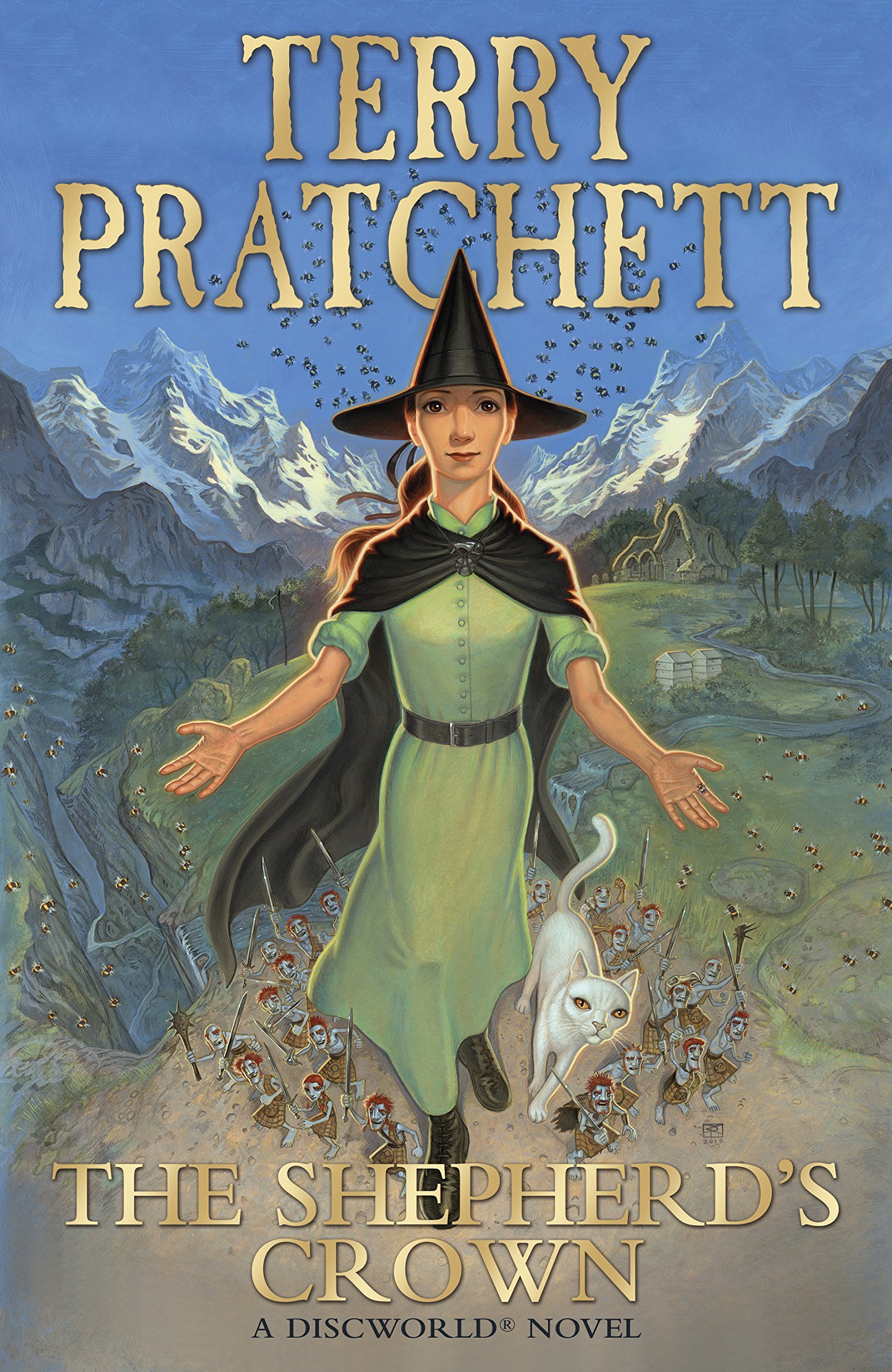
Bonus review: The Shepherd's Crown - Terry Pratchett

This afternoon I took Terry Pratchett's last novel, The Shepherd's Crown, to a café (accidentally buying 3 more books on my way into town), and finished it in 3 hours.

This novel follows Tiffany Aching as she comes into her own as a professional witch and has to face up to the increase in responsibility that entails, as well as another threat of elven invasion.

I don't want to give spoilers to anyone who hasn't read it, but I will say there's a major character death, which feels so autobiographical, almost as though it's Pratchett's own goodbye to the world, that it really was very moving above and beyond its implications for the character within the novel.

The Shepherd's Crown is full of a joy of life and an optimism about human nature, with laugh-out-loud moments and some truly wonderful awful puns. It feels much better put-together than a few of his later works, which for me felt as though they were lacking in structure, whereas this one feels like one complete story in its own right. There are a few loose ends, which is unsurprising for a posthumous publication, but overall it was a fantastic read, a good balance of plot, humour and pathos.

Now that I've finished it it's occurred to me that I'll never again be able to read a new Pratchett novel, and that makes me very sad indeed.


Next up: Bridget Jones' Diary by Helen Fielding

Tuesday, 15 September 2015

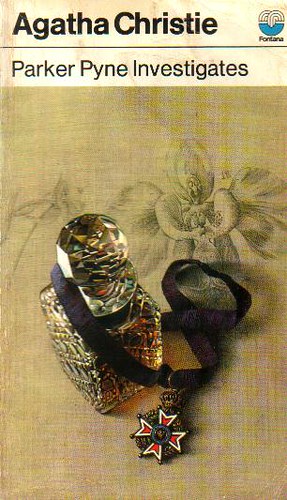
Parker Pyne Investigates - Agatha Christie

Parker Pyne Investigates is more a series of short stories than one novel, featuring Mr Parker Pyne, an ex-statistican who now consults for a living. He claims not to be a detective, and in fact he's almost the opposite of a detective – people come to him unhappy from insecurity in their marriage, dissatisfaction with their lifestyle, or simply out of boredom – and he secretly engineers events which push them in the direction of becoming happier.

The first half of the book has a collection of these 'consultation' stories in London, but the second half follows Mr Parker Pyne on a series of travels around the Middle East, Egypt and Greece, in which he finds himself reluctantly pulled into playing the detective even on holiday.

As a character Parker Pyne feels like a cross between Poirot and G K Chesterton's Father Brown. His apparently haphazard methods and understanding, stolid manner almost always lead to him succeeding somehow, and he takes success or the occasional failure with the same amiable placidity.

This collection of short stories feels almost like an artist's sketchbook, where an idea or concept for one of Christie's more complex plots is briefly sketched out and played with to explore its potential. The stories are amusing, ironic and full of trademark twists and good-humoured melodrama.

Overall, a light, pleasant read for any mystery fan.


Next up: Bridget Jones' Diary by Helen Fielding

Sunday, 13 September 2015

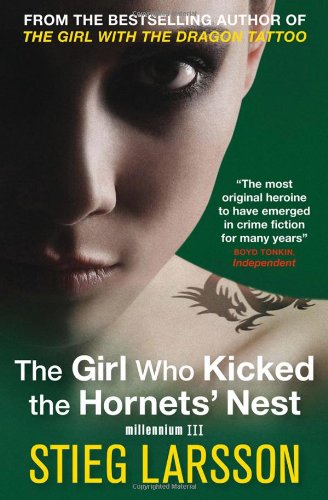
The Girl Who Kicked the Hornet's Nest - Stieg Larsson

Rather longer than the previous novels (at nearly 750 pages in my edition), The Girl Who Kicked the Hornet's Nest finishes off Stieg Larsson's Millennium Trilogy. I don't want to give spoilers for The Girl Who Played with Fire, but I will say that we begin this novel with Salander stuck in a hospital bed and awaiting trial for murder.

Of necessity the majority of the action is done by the other characters in this novel, although Salander proves exceptionally resourceful even from a secure hospital room. Blomkvist races to uncover the truth about Salander and her father, while an underground Swedish secret services cell desperately tries to get her committed once again in order to cover up her father's past crimes.

Once again Larsson's style is clear, direct and gripping. Action and subterfuge merge as we follow the manoeuvres and counter-manoeuvres of the opposing sides, and the emotional and moral ambiguities add a refreshing sense of realism. There is no theatricality about the “bad guys'” point of view sections, only a feeling of people with a different sense of loyalty and priorities. Again the only negative I have, especially having read the trilogy spaced out over several years, is that I found the extensive network of minor characters and their relationships and pasts difficult to recall at times.

The frantic action leads up to the culmination of the trilogy, Salander's trial to try to prove her sanity and innocence once and for all. All the strands carefully woven through the series are pulled together to form a very satisfying legal and personal conflict between Salander and her nemesis Teleborian, who was responsible for her original committal in a psychiatric unit as a child.

This was a gripping, addictive novel – I can't tell you the amount of times I meant to stop reading and just had to read one more chapter. The Girl Who Kicked the Hornet's Nest is a fast-paced story full of big personalities and complex intertwined schemes, coming together to form a tense and dramatic climax.


Next up: Parker Pyne Investigates by Agatha Christie

Saturday, 22 August 2015

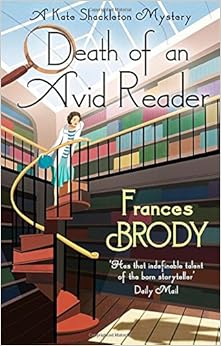
Death of an Avid Reader - Frances Brody

This looked as though it would be a fairly gentle Christie-imitation murder-mystery – a widowed lady-detective searching for the long-lost illegitimate daughter of a titled lady on her deathbed, while investigating the murder of a university professor found dead in her local library. This seems to be the second novel in a series, but enough was explained that I didn't feel left behind.

To begin with, the setting and characterisation ambled along, and it took me a while to warm up to Kate Shackleton, the central detective. However, around the halfway mark, the plot picked up the pace and the story became more intriguing, and I found myself really wanting to find out the answers.

Once I gave them time the characters rounded out more and the story began to feel more compelling, including some surprisingly gritty aspects for what seemed on the surface an essentially respectable detective story, and some genuinely surprising twists.

Overall, a slow start, but a detective novel which comes into its own and turns into a mostly pleasant, easy-to-read but still attention-grabbing story.


Next up: The Girl Who Kicked the Hornets' Nest by Stieg Larsson

Sunday, 16 August 2015

Les Liaisons Dangereuses - Pierre Choderlos de Laclos

I really enjoyed this novel from the very beginning. The moral ambiguity of each character and the focus on concealment and manipulation make each individual into a fascinating character study, and the fact that the story is told through letters allows each person's differing viewpoints on the same events to shine through. The correspondence between various members of a connected group gradually builds up into a complex web of interdependent relationships, binding the characters' futures together.

In spite of what feels like an obligatory moral message at the close of the novel, there is a joy and humour in the machinations of the central characters, the Vicomte de Valmont and his ex-lover the Marquise de Merteuil. Their charisma and the genuine affection in their letters to each other, if to none of the other characters, makes it impossible to dislike them however badly they act, and although they are the two pivotal characters, the more minor characters are also given enough space to feel real in their own right.

This is a surprisingly unpredictable novel, full of human complexity and lightened with flashes of humour and irony. Very much worth reading, and I have a few film adaptations ready to watch now I've finished it.


Next up: Death of an Avid Reader by Frances Brody

Saturday, 8 August 2015

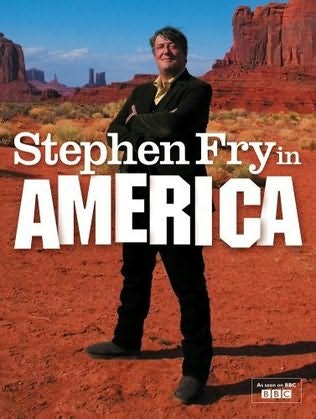
Stephen Fry in America - Stephen Fry

Even though I didn't catch the BBC TV series this book is supposed to accompany, I didn't find it lacking because of this. The general tone is anecdotal and amusing, like an old friend telling stories of his holiday, and Stephen Fry manages to be honest even about the negatives while remaining warm and generally complimentary.

The book is divided into a chapter for each state, and the photos and short sections make it more approachable and fun than a weighty encyclopaedia of travel knowledge. Of course with such a vast and diverse area to cover, some states aren't as in-depth as they might be, but a general overview is always given, alongside more personal experiences in each state.

I've always found it difficult to imagine such a large country as the USA functioning as one entity, and this book really made me appreciate how different each state is in its interests, attitudes and physical landscapes. This is a proper coffee-table book, entertaining and easy to dip into.


Next up: Les Liaisons Dangereuses by Pierre Choderlos de Laclos

Monday, 22 June 2015

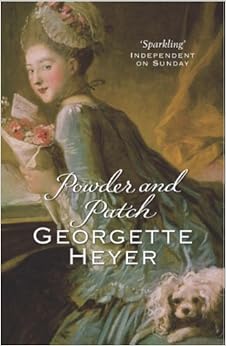
Powder and Patch - Georgette Heyer

In this short romantic comedy, Philip Jettan, heir to a country estate, is told by his childhood sweetheart that he is too unsophisticated and boorish, and that he must go to town to become a real gentleman or she will not have him. Reluctantly he travels to Paris, where (somewhat implausibly) he takes naturally to French fashion and court gentility and is a great social success. On his return, his beloved Cleone barely recognises the new, polished Philip, and he has to win her approval all over again.

Although rather a contrived, unconvincing plotline, Powder and Patch is full of witty dialogue and has some very funny scenes, particularly with the role-reversal of the couple when Philip returns to England. Heyer's usual warmth and humour brings the characters to life and makes them all likeable and enjoyable to read about.

An amusing little novel, great for picking up if you fancy something light and quick to read.


Next up: Stephen Fry in America by Stephen Fry

Sunday, 21 June 2015

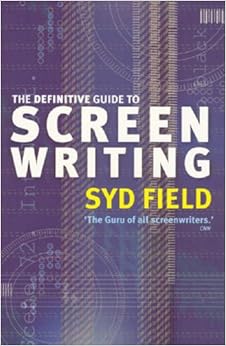
The Definitive Guide to Screenwriting - Syd Field

I began this book completely uneducated as to screenwriting – I'd watched and enjoyed films, but had no idea what went into the process of crafting them. Field starts out by explaining the basics of film structure and theory (very useful if, like me, you're a total beginner), then goes on to dedicate individual chapters to specifics like character, plot, and each section of the film. He finishes by explaining the process of turning a freshly-written screenplay into an eventual film, which again was very useful new information for me.

Field has an open, conversational style that makes for approachable reading and ease of understanding. I did find that some points felt rather laboured, and that he takes a rather didactic tone (sometimes it felt like I was being told what to think and feel, as well as what to do, during the screenwriting process), but on the whole this was very engaging and pleasant to read considering it is, essentially, a textbook.

As my own background is in literature, it was especially interesting for me to see the very different methods by which a screenplay must tell a story – by showing only the external, in particular tiny details that would be implicit in a novel – as opposed to the forms I'm more used to, where the reader is usually privy to what goes on in the protagonist's head, and any external cues we're given are those perceived specifically by that character.

I couldn't help but feel a bit annoyed by Field's assertion that for a film adaptation of a novel “you are not obligated to remain true to the original material.” I can see that there are great challenges involved in transferring a story from one medium to another (more than I'd appreciated before reading this book), but I, and probably many others, are familiar with that sense of disappointment that comes when you see a much-anticipated screen adaptation of a beloved novel and it just isn't the same, it doesn't capture what you loved about the book at all. In my opinion there's nothing wrong with a screenwriter reading a novel and feeling inspired to write a screenplay on a similar theme – just please, please, unless you're willing to be faithful to the original, don't label it as an adaptation.


Next up: Powder and Patch by Georgette Heyer

Sunday, 7 June 2015

Lamentation - C J Sansom

In C J Sansom's most recent installment, hunchbacked medieval lawyer Matthew Shardlake is asked to help Queen Catherine Parr recover a compromising book revealing her controversial religious opinions, before it is brought to King Henry VIII and causes her downfall and possible execution. His efforts to discover the book entangle him with some of the most powerful figures in the realm and lead him into danger and self-doubt.

As with the previous novels in the series, one of the best things about this novel is the vividity of description Sansom uses to bring the reader into medieval London. We experience the sights, smells and sounds, and are jostled in the crowds along with Shardlake. I'm not ashamed to admit that much of my historical knowledge is taken from historical fiction, and getting to know historical characters and their deeds by almost experiencing them by proxy sticks in my mind much better than by trying to memorise dates and battles.

Sansom creates memorable, believable characters, and the plot twists and winds deviously with betrayal, double-bluffs, spies and infiltration. Lamentation is full of emotional depth as well as intrigue, and keeps you turning the pages right until the end.


Next up: The Definitive Guide to Screenwriting by Syd Field

Saturday, 30 May 2015

Scorn With Added Vitriol - Matthew Parris

Bonus Review: Scorn With Added Vitriol by Matthew Parris

This a fun little book full of hundreds (possibly more than a thousand?) of collected short insults and curses on a wide variety of topics, throughout history to the present day. There are enough in here to appeal to peoples' different senses of humour – everything from open vulgarity to suave lines from Oscar Wilde - and I've enjoyed picking out my favourites to post on my Facebook feed.

Parris has sorted them into themes, some neatly arranged so that they seem to answer each other in an ongoing argument. A great little stocking-filler, ideal for dipping into on a coffee table, in the bathroom, or (my personal favourite) during video game loading screens.