Showing posts with label H G Wells. Show all posts

Monday, 14 April 2014

The Island of Dr Moreau - H G Wells


The Island of Dr Moreau is only a short novelette, but, like most of H G Wells’ stories, is thought-provoking and has a lot to say about human nature meeting scientific progress.

The narrator, Edward Prendick, is marooned on an island – human population two: Dr Moreau, whose controversial work got him exiled from England, and his assistant, Montgomery. He soon discovers that Moreau is conducting experiments on animals to transform them into a hideous semblance of humanity. He moulds them, both in body and mind, into disfigured creatures which are not quite animal and not quite human.

This being H G Wells, Dr Moreau’s work backfires, resulting in disaster. We return to London with Prendick, who is a changed man, unable to see anything other than beastly echoes in his fellow humans.

It’s told in Wells’ usual matter-of-fact, documentary style, which lends a solidity and a sense of uneasy realism to the horrors described. The narrator’s disillusionment with humanity has an echo of Gulliver’s Travels, although for different reasons.

A good short tale to dip into, which left me mulling over ideas for some time afterwards.


Next up: The Lovely Bones, by Alice Sebold

Tuesday, 8 April 2014

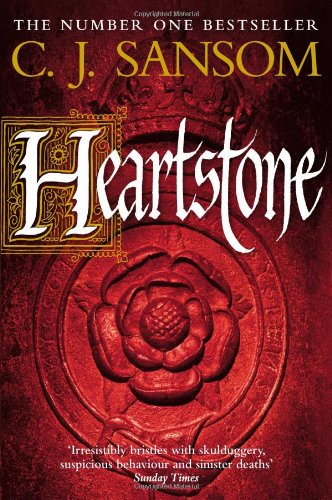
Heartstone - C J Sansom


Heartstone, the fifth in Sansom’s Shardlake series, continues the adventures of hunchbacked lawyer Matthew Shardlake. In this novel Shardlake travels to Portsmouth to investigate claims of abuse of a wardship trust, and to look into events that put a friend of his into Bedlam nineteen years previously.

Once again, Sansom really shines in his vivid descriptions of Tudor life – not only do you get the sights and sounds of the time, but the smells, physical sensations, and everyday inconveniences. Even descriptions of naval skirmishes with the French are gripping, and really put you into the heart of the action, and I normally get rather bored during battle descriptions. The bustling military encampments, overcrowded cities and (on the surface) serene, secluded country estates all leap off the page and into the mind’s eye. Maps of Shardlake’s journey and of the areas he visits really add to the immersive quality of the story and allow the reader to trace, in physical terms, the location of the action.

I did find this novel slightly less enjoyable to read than its predecessors, in part perhaps because so few of the characters the reader spends most of the time with are likeable. There is a sense of frustration during parts of the narrative where investigations seem to be going round in circles, which certainly mirrors that felt by the protagonist, but makes for more difficult reading. That said, the dénouement turns assumptions on their head and puts a new perspective on events.

Historical cameos featuring Henry VII, Catherine Parr and the Mary Rose, among others, are done deftly and without ostentation, blending seamlessly into the landscape of the novel without any sense of being unnecessary or out of place.

In short, another wonderfully vivid and compelling instalment in the Shardlake series. Wikipedia tells me to expect book six, Lamentation, sometime this year, and I’m definitely looking forward to it.


Next up: The Island of Dr Moreau, by H G Wells