This week's Booking Through Thursday is:
Do you read books written for children or teens? Or do you stick to books for adults?
While I do mostly ready adult fiction (and I don't mean the 50 Shades of Grey kind), I am partial to a good teen fiction novel now and again - mostly dystopias like The Hunger Games or Divergent, as I feel they still have some really interesting points to make, they're just not as dressed up in philosophy and subtlety as adult ones often are.
I'm not sure the age distinction is particularly valid, it's more about reading level and patience. Sometimes you want something a bit more direct and to the point, and a 'teen' book can be great for that. Of course there is the fact that novels with sex or a with a main romantic interest as the central theme are less suitable for pre-teens because it's not really a part of life that they understand at the time - I was reading many 'adult' standard novels by age 12 or so, and there were parts where I just didn't understand the motivation of the characters because I wasn't emotionally mature enough to do so.
So yes, if it's well written I'm perfectly happy with teen fiction, although tearing through it in a couple of days is a little less satisfying than a book that lasts a week or more.
Showing posts with label teen fiction. Show all posts
Showing posts with label teen fiction. Show all posts
Friday, 19 December 2014

Tuesday, 16 December 2014
Bitterblue - Kristin Cashore

I loved the previous two novels in this
trilogy, Fire and Graceling,
and Bitterblue was
very different but just as good. The story picks up 10 years after
the end of Graceling,
with the young queen Bitterblue beginning to pick up the pieces of
her shattered kingdom.
Even
the premise, I think, is quite original – while coming-of-age
novels involving young rulers are very common, the idea of seeing
what happens after the villain is defeated, what happens to all the
ordinary people trying to rebuild their lives, is very unusual. This
novel is about what happens after the happy ending.
Bitterblue's
despotic father, King Leck, used his mind-manipulating powers to
confuse and control his subjects, forcing them to forget about the
atrocities he did in the deluded name of progress. While those who
served under him are desperate to forget those times, the young queen
wants to dig up the past in order to provide reparations for those
who suffered. Her castle is full of secrets, locked doors, and coded
messages, and many people wish for them to remain hidden.
While
there is a love interest involved, it's more of a side issue than the
main point of the story, which is something Cashore does very well,
and like in Fire we
get the feeling that Bitterblue's own narrative is far from being
all-important. There are tantalising glimpses into the lives of other
kingdoms and other people, which add depth and realism to her fantasy
universe. Instead of being simply narrative devices, other
characters, however briefly mentioned, feel as though they have a
full story to tell themselves, if they were only given the chance.
 Another
wonderful (and unusual) thing about this trilogy is the way the three
books fit together. Aside from being written out of chronological
order, each is set in a different kingdom, and features different
main characters. Places and people from each novel have an impact on
each of the other stories, and having read all three I feel as though
each one adds significance to both of the others. Definitely worth a
read, and I recommend getting your hands on the whole trilogy if you
can.
Another
wonderful (and unusual) thing about this trilogy is the way the three
books fit together. Aside from being written out of chronological
order, each is set in a different kingdom, and features different
main characters. Places and people from each novel have an impact on
each of the other stories, and having read all three I feel as though
each one adds significance to both of the others. Definitely worth a
read, and I recommend getting your hands on the whole trilogy if you
can.
The cover art is, again, very much underselling itself, but there are much nicer editions out there, like this one from Barnes and Noble.
Next
up: Bel-Ami by Guy de
Maupassant
Saturday, 6 September 2014
Film adaptation - Divergent
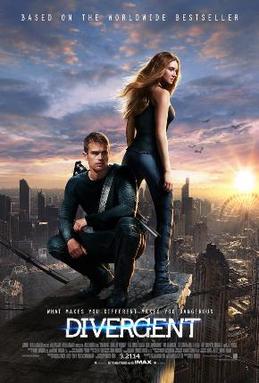
It really brought to life the melancholy beauty of the destroyed landscapes being reclaimed by nature, and while much of the film took place in underground tunnels, we see enough of the outside world not to get bored of the setting. The central character, Tris (played by Shailene Woodley) does, in the usual hollywood fashion, remain pretty even after being horribly beaten up, only the odd painted-on bruise remaining. It was nice, however, to see that she didn't cry attractively - why shouldn't people in films have distorted, crumpled faces and hoarse nasal voices when they cry, as well as real life? That made the sad parts all the more touching, for me, to see a more realistic expression of grief.
The action was well-paced, and the film stuck well to the book - losing some of its depth due to time constraints, but that's always a problem. Well worth a watch, if you enjoyed the book.
Sunday, 17 August 2014
Film adaptation - City of Bones

This is one
of those unusual times when I felt that the film adaptation was actually much
better than the book. I read Cassandra Clare's City of
Bones some years ago – I liked the cover art and was going through a bit of
an urban fantasy phase at the time. I really didn’t enjoy it, however. I found
Clary’s narrative voice bratty and irritating, and most of the plotline rather
clichéd.
The film was
much better because I didn’t have to listen to Clary Fray’s internal monologue,
and of course anything is improved by the addition of Lena Headly and Robert
Sheehan. Admittedly some of the special effects were a bit naff, but on the whole it
felt much faster-paced and less whiny than the novel, and despite quite a lot
of awkward eye contact moments it got pretty gripping by the end. Plus the
entire cast’s magnificent cheekbones don't hurt.
Sunday, 10 August 2014
Graceling - Kristin Cashore
 Graceling came with the rather dubious
recommendation, “[This] exquisitely drawn romance … will slake the thirst of Twilight fans”, on the front cover.
However, I really enjoyed Fire, so I
went ahead and read it anyway.
Graceling came with the rather dubious
recommendation, “[This] exquisitely drawn romance … will slake the thirst of Twilight fans”, on the front cover.
However, I really enjoyed Fire, so I
went ahead and read it anyway.
While it
doesn’t quite have the accomplished sense of depth of Fire, this is Cashore’s debut novel, and as such that’s simply a
sign that her novels have developed since the beginning. She does a good job of
introducing us to the fantasy world the story takes place in, without being artificially
explanatory or giving us too many made-up terms to try and remember.
The heroine,
Katsa, is a graceling, marked out by her mismatched eyes and an uncanny natural
ability – in her case, the ability to inflict violence. Ever since her gift was
discovered, her uncle the King has been using her as a tool of intimidation
against those who displeased him. A chance to investigate the mysterious kidnapping
of a neighbouring King's father offers her an opportunity to escape and
to prove to herself and others that she’s more than just a mindless thug.
One of the
things that really stood out about this novel was the unusual angles we see events from. Katsa is an unconventional young woman, but this is
only to be expected as the heroine of a young adult fantasy novel. However, the
feel of the narrative is also different – while the novel appears to be of
the standard ‘vanquish the villain’ type, you get the feeling that defeating the
bad guy wasn’t really what it was all about.
The Twilight-style epic romance promised on
the cover was, thankfully, more human and believable than that, albeit made
more complex by the respective graceling abilities of the pair involved. This
novel is populated by strong characters throughout, and we also meet Princess
Bitterblue, the protagonist of the third and final novel in the trilogy. Despite being a child, she's forthright and intriguing, and I’m really
looking forward to reading more about her.
Next up: The Unquiet Bones by Mel Starr
Sunday, 27 April 2014
Fire - Kirsten Cashore
 The first
thing I have to say is that this book deserves a better cover. The Gollancz
version (the one I read) is your typical teen-fantasty ‘girl-with-weapon-standing-on-rock-with-mystic-looking-background’ image. And the part that grates with me
most is the fact that, if the image is actually trying to reference any part of
the book, the dress should be purple, not red.
The first
thing I have to say is that this book deserves a better cover. The Gollancz
version (the one I read) is your typical teen-fantasty ‘girl-with-weapon-standing-on-rock-with-mystic-looking-background’ image. And the part that grates with me
most is the fact that, if the image is actually trying to reference any part of
the book, the dress should be purple, not red.
The Dial YA
version of the cover is better, featuring a bow and arrows rather than
lady-in-dress, and I really like the understated originality of the Clarsen YA German edition.
Inside, Fire is anything but your average YA fantasy novel. The usual elements are there – insular non-time-specific low-tech kingdoms, magical powers, and so on – but Cashore takes it so much further. The protagonist, Fire, has a complexity to her sexual past which is refreshing compared to the coyness YA novels often have about sex. It helps the reader to see her as a rounded human being, rather than a copy-and-pasted heroine. The intricacy of the relationships between all of the characters in this novel is really well done, and leads to some truly surprising and touching moments.

Naturally,
Fire does have special powers – what self-respecting fantasy heroine doesn’t? She was born a ‘monster’,
a genetic aberration possible in any species, which gives the individual very
bright colouring and unnatural beauty, and the power to influence the minds of
those around them. Making your heroine inhumanly beautiful is a tricky thing to
pull off without making it all feel like a giant piece of wish-fulfillment, but
Cashore manages it. Fire sees her appearance as a disadvantage in most situations,
and never truly comes to accept it as an integral part of who she is, not even
by the end. Cashore also considers the logistics of Fire’s condition; ‘monsters’
are cannibalistic and lust after each other’s blood, which means that she is
constantly attracting ‘monster’ insects and that she can’t leave the house when
on her period without being mobbed by raptors.
 Another
aspect I really liked about this novels is that Fire isn’t the
be-all-and-end-all of everything. Of course, as the protagonist, she does lie
at the centre of the story, but she is only involved in a very small part of the events
taking place. The fact that she recognises her insignificance amid grand
political schemes and the war sweeping the kingdom adds a sense of perspective
not often found in fantasy novels.
Another
aspect I really liked about this novels is that Fire isn’t the
be-all-and-end-all of everything. Of course, as the protagonist, she does lie
at the centre of the story, but she is only involved in a very small part of the events
taking place. The fact that she recognises her insignificance amid grand
political schemes and the war sweeping the kingdom adds a sense of perspective
not often found in fantasy novels.
Overall, I
really enjoyed this one, and am looking forward to reading the other two in the
trilogy, Graceling and Bitterblue.
Next up: Cousin Kate, by Georgette Heyer
Wednesday, 2 April 2014
The Host - Stephenie Meyer
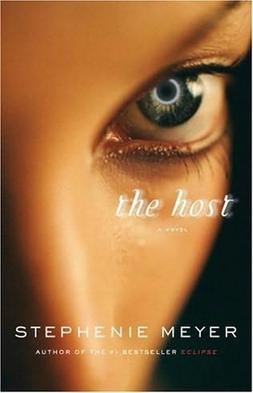 I don’t
normally like to post mean reviews, but at this point I think Stephenie Meyer
is rather too rich to
I don’t
normally like to post mean reviews, but at this point I think Stephenie Meyer
is rather too rich to
Admittedly, The Host is better than Twilight.
Significantly better, in fact. The plot actually sounds promising: an alien
invasion by parasitic creatures that attach to the spines of their hosts and
continue to live their lives as normal until virtually the whole planet is taken
over, leaving only tiny pockets of still-human resistance. The narrative is
told by one of the alien consciousnesses themselves, which is also an
interesting concept.
However, it’s
at this point that promising sci-fi originality goes out of the window and
Meyer’s compulsion to turn everything into a vapid teen romance steps in. Instead of choosing one of the
many interesting potential avenues, Meyer focuses on our alien protagonist Wanda
and her human host Mel’s inner girlish arguments, and on the fact that Wanda
appears to have inherited Mel’s love interest in her boyfriend Jared.
Wanda
decides to search for Jared and her brother Jamie, who are sheltering in a cave
in the desert. She’s taken prisoner by the community Jared and Jamie have joined,
and, now that Mel’s been taken over by the enemy, Jared is full of hatred for
her and immediately proclaims that she should be killed. Although Wanda and Mel
manage to gradually win over the trust of most of the community, Jared
is staunch in his opinion, and even hits her several times, giving her
noticeable injuries and facial scarring. She continues to try and gain his
trust by putting herself last in everything and generally acting like a
doormat, refusing to stand up for herself even to save her own life. Just as
women should do in the face of domestic violence, apparently. Thanks for that,
Meyer.
Despite the advances of attractive nice guy Ian, who has come to like Wanda for who she is now rather than Mel as she was previously and acts as protector and comforter to her, both Wanda and Mel cling to their desperate love for the man who quite literally wants to murder them for the majority of the novel. I was worried, given the fact that virtually the same situation happens in Twilight (ie. Edward literally wanting to kill Bella most of the time, and I’m-your-totally-platonic-friend Jacob doing everything for her and being off-handedly rejected for not being her true love), that the Wanda-Mel composite would end up somehow living happily ever after with the violent unpleasant Jared.
Despite the advances of attractive nice guy Ian, who has come to like Wanda for who she is now rather than Mel as she was previously and acts as protector and comforter to her, both Wanda and Mel cling to their desperate love for the man who quite literally wants to murder them for the majority of the novel. I was worried, given the fact that virtually the same situation happens in Twilight (ie. Edward literally wanting to kill Bella most of the time, and I’m-your-totally-platonic-friend Jacob doing everything for her and being off-handedly rejected for not being her true love), that the Wanda-Mel composite would end up somehow living happily ever after with the violent unpleasant Jared.
However, after telling her that, “You are the noblest, purest creature I've ever met. The
universe will be a darker place without you,” (a compliment she was clearly
fishing for from the very beginning of the novel), her friends collude to
transplant her consciousness into a vacant body (another young,
attractive female, obviously), conveniently saving her the trouble of going
through with her difficult decision to leave Mel her own body back at Wanda’s
expense. Wanda and Ian can live happily ever after, and Mel is lucky enough to
have her boyfriend back – the one who weeks ago beat her repeatedly and wanted
to kill her. Lucky, lucky Mel. But apparently he’s hot, so that’s what
matters.
So, um, yes.
Always submit meekly to your one true love, even if he beats you and threatens
to kill you, and everything will be ok, until you… get transplanted into
someone else and can have the nice guy? I’m still quite confused about the
message I’m getting from this one.
Next up: Heartstone, by C J Sansom
Friday, 21 March 2014
Divergent - Veronica Roth
Surprise review!
_by_Veronica_Roth_US_Hardcover_2011.jpg) I know I
said the next review would be of The
Complete Father Brown Stories, but frankly, at over 800 densely packed pages, it’s very long. I thought I’d
intersperse some light relief in the form of Divergent, the first novel in Veronica Roth’s teen trilogy.
I know I
said the next review would be of The
Complete Father Brown Stories, but frankly, at over 800 densely packed pages, it’s very long. I thought I’d
intersperse some light relief in the form of Divergent, the first novel in Veronica Roth’s teen trilogy.
I hadn’t
heard of this novel until I saw a trailer for its film adaptation in the
cinema, and had been looking out for it since. I thought the trailer looked
interesting, but a little like it was jumping on the Hunger Games bandwagon.
Divergent did remind me of The Hunger Games, but mostly in a positive sense, in that it’s a teen dystopia with a strong female protagonist. The setting is a society divided into five distinct, sequestered factions, based on primary personality traits – Abegnation for the selfless, Dauntless for the brave, Candor for the honest, Erudite for the intelligent, and Amity for the peace-loving. On reaching 16 each child undergoes a test to determine their most suited faction. While most get a distinct recommendation, Beatrice’s results are inconclusive, making her a Divergent, someone who doesn’t fit neatly into any one of the factions. She chooses to leave her family and join the Dauntless faction, and the novel follows her struggles to adapt in her new life, in a world about to fall apart.
I thought the obligatory teenage romance aspect was rather more simplistic than that in The Hunger Games, but then again I really liked the more complicated and gender-stereotype-reversing romantic situation between Peeta and Katniss, so Divergent had a lot to live up to there. In terms of grittiness, this novel got its collateral damage in almost from the beginning, and the sense that there are real consequences to the characters’ actions is with you throughout.
I felt as though I could see the larger of the plot twists coming, but was pleasantly surprised to be surprised by some of the reveals that took place. I can confidently say that, if you enjoyed The Hunger Games, you’ll like this, and I look forward to reading the other two novels in the trilogy and to seeing what they make of the film adaptation.
Next up: The Complete Father Brown Stories, by G K Chesterton
Divergent did remind me of The Hunger Games, but mostly in a positive sense, in that it’s a teen dystopia with a strong female protagonist. The setting is a society divided into five distinct, sequestered factions, based on primary personality traits – Abegnation for the selfless, Dauntless for the brave, Candor for the honest, Erudite for the intelligent, and Amity for the peace-loving. On reaching 16 each child undergoes a test to determine their most suited faction. While most get a distinct recommendation, Beatrice’s results are inconclusive, making her a Divergent, someone who doesn’t fit neatly into any one of the factions. She chooses to leave her family and join the Dauntless faction, and the novel follows her struggles to adapt in her new life, in a world about to fall apart.
I thought the obligatory teenage romance aspect was rather more simplistic than that in The Hunger Games, but then again I really liked the more complicated and gender-stereotype-reversing romantic situation between Peeta and Katniss, so Divergent had a lot to live up to there. In terms of grittiness, this novel got its collateral damage in almost from the beginning, and the sense that there are real consequences to the characters’ actions is with you throughout.
I felt as though I could see the larger of the plot twists coming, but was pleasantly surprised to be surprised by some of the reveals that took place. I can confidently say that, if you enjoyed The Hunger Games, you’ll like this, and I look forward to reading the other two novels in the trilogy and to seeing what they make of the film adaptation.
Next up: The Complete Father Brown Stories, by G K Chesterton
Subscribe to:
Posts (Atom)