Showing posts with label fantasy. Show all posts

Saturday, 3 October 2015

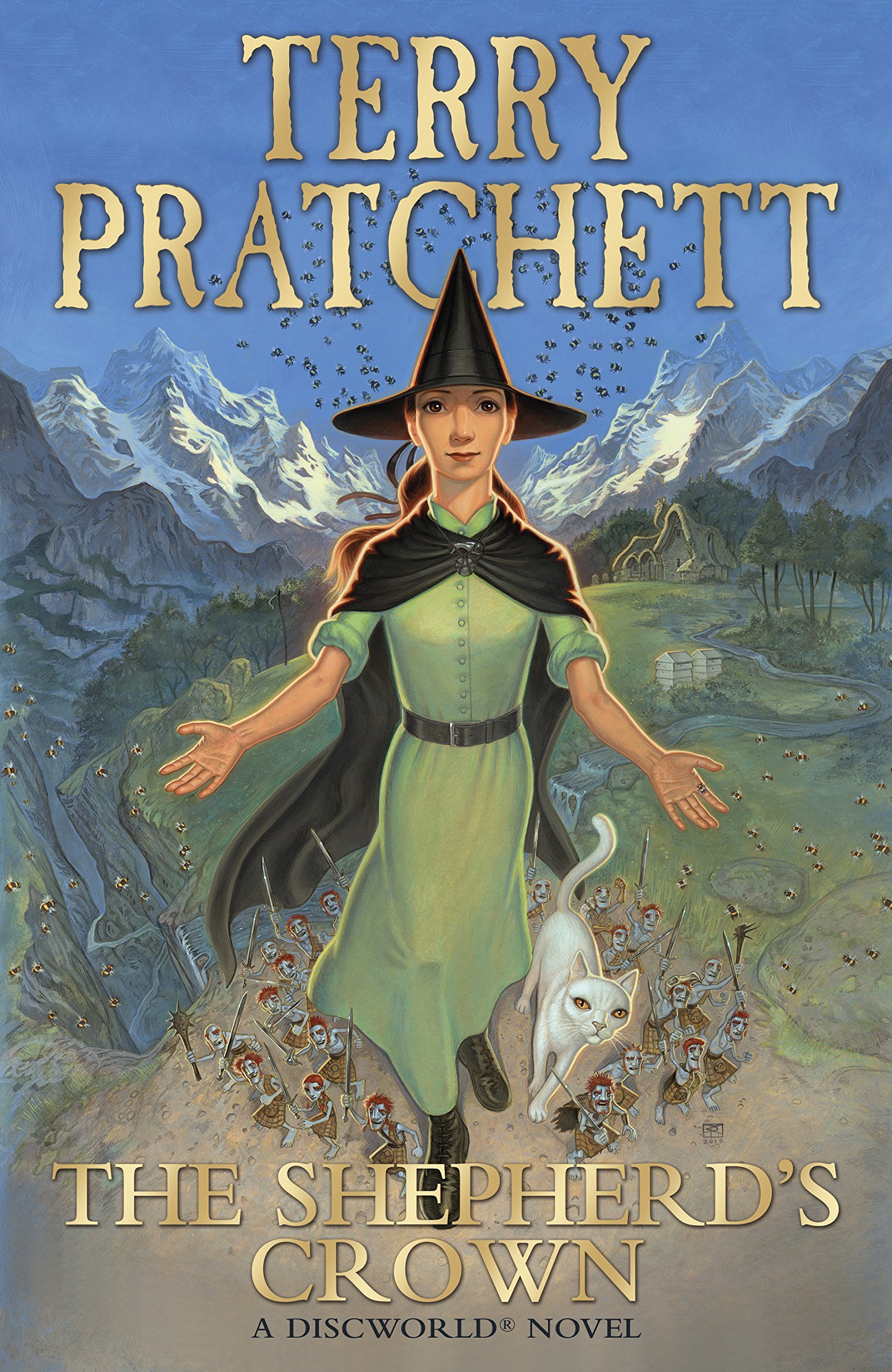
Bonus review: The Shepherd's Crown - Terry Pratchett

This afternoon I took Terry Pratchett's last novel, The Shepherd's Crown, to a café (accidentally buying 3 more books on my way into town), and finished it in 3 hours.

This novel follows Tiffany Aching as she comes into her own as a professional witch and has to face up to the increase in responsibility that entails, as well as another threat of elven invasion.

I don't want to give spoilers to anyone who hasn't read it, but I will say there's a major character death, which feels so autobiographical, almost as though it's Pratchett's own goodbye to the world, that it really was very moving above and beyond its implications for the character within the novel.

The Shepherd's Crown is full of a joy of life and an optimism about human nature, with laugh-out-loud moments and some truly wonderful awful puns. It feels much better put-together than a few of his later works, which for me felt as though they were lacking in structure, whereas this one feels like one complete story in its own right. There are a few loose ends, which is unsurprising for a posthumous publication, but overall it was a fantastic read, a good balance of plot, humour and pathos.

Now that I've finished it it's occurred to me that I'll never again be able to read a new Pratchett novel, and that makes me very sad indeed.


Next up: Bridget Jones' Diary by Helen Fielding

Saturday, 15 August 2015

Intriguing

This week's Booking Through Thursday is:

What’s the most intriguing book you ever read? Something that made you think, explore new ideas, or just be really impressed and awed and amazed at the sheer wonder of the creativity of the thing?

Philip Pulman's His Dark Materials trilogy has always filled me with a sense of wonder and vast potential. The beautiful, vivid descriptions of such a wide range of worlds and the promise of even more unexplored over the horizon gave me a wonderful feeling.

In a completely different sense, Jeff Noon's debut novel Vurt and its sequel Pollen conjured up a much darker cyberpunk dystopia, in which humans, dogs, robots, aliens and spirits interbred to create marvellous and sinister cross-species beings with varied abilities and their own subcultures. The fast-moving plot leaves little time for explanation, so you have to pick up bits and pieces as you go along. That's another world I'd really like to explore at my leisure, look into the history of and figure out how things got the way they did.


I'm always on the lookout for new intriguing novels to explore - are there any that any of you would strongly recommend?

Monday, 6 July 2015

Film adaptation - Jonathan Strange & Mr Norrell

It's been years since I read Susanna Clarke's novel, but I remember being inseparable from it when I did. This 7-part BBC adaptation is a fantastic transition from book to screen, and I thoroughly recommend it to fans of the novel.

At a total of 7 hour-long episodes, it's long enough that nothing felt omitted, and every major character is (in my opinion) very well cast. Bertie Carvel makes a delightfully eccentric gentleman-magician, Eddie Marsan a convincing pedantic academic, and Marc Warren a wonderfully sinister Faerie King, to name only a few.

This adaptation perfectly captures the atmosphere of the original novel, with the sharp contrast between the stiff, mannered Georgian England and the fascinatingly grotesque faerie world of Lost Hope. Every scene looks beautiful, and the series as a whole feels like an intriguing cross between Jane Eyre's country houses and moorland and a particularly noir Alice in Wonderland.

A faithful and gripping adaptation of one of my (many) favourite novels. Watch it if you get the chance!

Monday, 11 May 2015

The Chronicles of Thomas Covenant, the Unbeliever - Stephen Donaldson

It's taken me a long time to finish, but it was worth every minute. On the cover, The Chronicles of Thomas Covenant, the Unbeliever is described as a “classic epic fantasy trilogy”, but it's so much more than that. Yes, it is an epic fantasy, with rolling hills, suspiciously elf- and dwarf-like human tribes, giants, orc-like twisted creatures of evil, and learned Lords who wield magical staves. I expected that much from the cover and blurb.

However, the first chapter begins with Thomas Covenant, previously successful author with wife and child, who was recently diagnosed with leprosy and as a result lost his family, his respect and his health. We have an incredibly vivid and moving account of the discovery of his disease and his sudden change to pariah in his own home in small-town America. It isn't until Covenant is hit by a police car and concussed that the 'fantasy' part of the story begins.

Covenant was warned on diagnosis that many lepers retreat into self-induced hallucinations to try and escape from the harsh reality of his disease, and so when he is plunged into a fantastic, beautiful land where his nerves are healed and he can function as a healthy adult once more, he doesn't believe any of it. One of the most fascinating aspects of this trilogy is the narrative viewpoint – instead of a hero, or even an anti-hero, we have almost a non-participant, a man who doesn't believe that any of what he's experiencing is real. Another thing that really sets The Chronicles of Thomas Covenant apart is the psychology of disability, which is so deeply and accurately portrayed; the foreword tells us that Stephen Donaldson's father worked with lepers in India in the 1940s and 50s, and that the author lived with him as a child when he was performing this work. His personal knowledge of the subject is obvious from the poignant, nuanced but brutally honest portrayal of Covenant's leprosy.

Gender equality was an unexpected but pleasant surprise, too. In most male-written fantasy universes sexual division is rife, but in The Land the council of elders who form a kind of parliament are all referred to as 'Lords', regardless of their gender. Similarly, when a couple marries, the wife takes the husband's name, but the husband also takes the wife's name – for instance, one couple Covenant meets are named Trell Atiaran-mate and Atiaran Trell-mate. Women are expected to be just as competent as men, and in fact the High Lord who leads the council in the second novel is a relatively young woman who is respected for her personal abilities.

Donaldson's unusual use of adjectives gives a lurid, dreamlike quality both to the fantasy Land and to the real-life sections, and he describes scenes using all of the senses, including touch, smell and taste, not just sound and vision. He builds a world rich with detail and background lore, my only criticisms being that he uses certain odd adjectives a little too often so that they start to jar ('extravagantly' and 'anile' being a couple of examples) and that I find his characters' habit of bursting into song or poetry during solemn, ceremonial occasions a little cringe-worthy.

That said, this is a story full of contradictions and moral ambiguity, and Donaldson is a master of the cliff-hanger chapter – many times when reading this I decided to just finish the current chapter and put it down, but found myself compelled to continue to find out what happened. I can't recommend this too highly – it has so much more depth and poignancy than your average fantasy novel, and is a very good epic fantasy story on top of that.


Next up: Bridget Jones: Mad About the Boy by Helen Fielding
Tuesday, 16 December 2014

Bitterblue - Kristin Cashore

I loved the previous two novels in this trilogy, Fire and Graceling, and Bitterblue was very different but just as good. The story picks up 10 years after the end of Graceling, with the young queen Bitterblue beginning to pick up the pieces of her shattered kingdom.


Even the premise, I think, is quite original – while coming-of-age novels involving young rulers are very common, the idea of seeing what happens after the villain is defeated, what happens to all the ordinary people trying to rebuild their lives, is very unusual. This novel is about what happens after the happy ending.


Bitterblue's despotic father, King Leck, used his mind-manipulating powers to confuse and control his subjects, forcing them to forget about the atrocities he did in the deluded name of progress. While those who served under him are desperate to forget those times, the young queen wants to dig up the past in order to provide reparations for those who suffered. Her castle is full of secrets, locked doors, and coded messages, and many people wish for them to remain hidden.


While there is a love interest involved, it's more of a side issue than the main point of the story, which is something Cashore does very well, and like in Fire we get the feeling that Bitterblue's own narrative is far from being all-important. There are tantalising glimpses into the lives of other kingdoms and other people, which add depth and realism to her fantasy universe. Instead of being simply narrative devices, other characters, however briefly mentioned, feel as though they have a full story to tell themselves, if they were only given the chance.


Another wonderful (and unusual) thing about this trilogy is the way the three books fit together. Aside from being written out of chronological order, each is set in a different kingdom, and features different main characters. Places and people from each novel have an impact on each of the other stories, and having read all three I feel as though each one adds significance to both of the others. Definitely worth a read, and I recommend getting your hands on the whole trilogy if you can.
The cover art is, again, very much underselling itself, but there are much nicer editions out there, like this one from Barnes and Noble.
 

Next up: Bel-Ami by Guy de Maupassant

Monday, 20 October 2014

Touch of Power - Maria V Snyder


I remember Maria V Snyder’s previous novels fondly, and this one didn’t let me down either. It also turned out to be surprisingly topical – I wasn’t expecting to find references to bioterrorism in a fantasy novel, but there you go.

The central character, Avry of Kazan, is a healer, blessed with the ability to heal ten times faster than the average person, and to take other peoples’ illnesses from them, to herself. Before the incurable plague that wiped out two-thirds of the population, healers were a valuable part of society, but blame fell on them for refusing to heal the plague victims, leading to their being hunted down and killed. Now, even other types of magicians are viewed with distrust, and there is a large bounty on Avry’s head.

She’s been on the run for years, but is discovered healing a young girl, and thrown into prison to be executed. Luckily, she is rescued from gaol, but by a band of men who have been hunting her down to force her to heal their leader of the plague – the very man she suspects started it to begin with.

Avry makes for a strong, independently minded heroine, albeit a little blind to her own feelings. Her powers are explained consistently and in a scientific manner, although not to the extent Brandon Sanderson manages to pull off. I found myself caught up not only by the plot and characters but also by curiosity as Avry pieces together the creation of the plague virus. The bleak, chaotic feel of a world depopulated by illness was vividly done too.


Next up: One Flew Over the Cuckoo’s Nest by Ken Kesey

Monday, 13 October 2014

Special delivery!

After a long and stressful day at work, followed by carrying food shopping home in heavy rain and coming back to a house blockaded by workmen, tools and assorted pieces of shower cubicle, I really needed something nice to happen. And it did! I only ordered Maria V Snyder's Avry of Kazan Series a couple of days ago, and wasn't expecting them for ages, but my housemate just knocked on my door with a big cardboard package.

I loved her Study and Glass Series, and had forgotten to check what she was writing recently, so when Amazon suggested I might like to read this trilogy I wholeheartedly agreed. Can't wait to get started!

Sunday, 17 August 2014

Film adaptation - City of Bones


This is one of those unusual times when I felt that the film adaptation was actually much better than the book. I read Cassandra Clare's City of Bones some years ago – I liked the cover art and was going through a bit of an urban fantasy phase at the time. I really didn’t enjoy it, however. I found Clary’s narrative voice bratty and irritating, and most of the plotline rather clichéd.


The film was much better because I didn’t have to listen to Clary Fray’s internal monologue, and of course anything is improved by the addition of Lena Headly and Robert Sheehan. Admittedly some of the special effects were a bit naff, but on the whole it felt much faster-paced and less whiny than the novel, and despite quite a lot of awkward eye contact moments it got pretty gripping by the end. Plus the entire cast’s magnificent cheekbones don't hurt.

Sunday, 10 August 2014

Graceling - Kristin Cashore


Graceling came with the rather dubious recommendation, “[This] exquisitely drawn romance … will slake the thirst of Twilight fans”, on the front cover. However, I really enjoyed Fire, so I went ahead and read it anyway.

While it doesn’t quite have the accomplished sense of depth of Fire, this is Cashore’s debut novel, and as such that’s simply a sign that her novels have developed since the beginning. She does a good job of introducing us to the fantasy world the story takes place in, without being artificially explanatory or giving us too many made-up terms to try and remember.

The heroine, Katsa, is a graceling, marked out by her mismatched eyes and an uncanny natural ability – in her case, the ability to inflict violence. Ever since her gift was discovered, her uncle the King has been using her as a tool of intimidation against those who displeased him. A chance to investigate the mysterious kidnapping of a neighbouring King's father offers her an opportunity to escape and to prove to herself and others that she’s more than just a mindless thug.

One of the things that really stood out about this novel was the unusual angles we see events from. Katsa is an unconventional young woman, but this is only to be expected as the heroine of a young adult fantasy novel. However, the feel of the narrative is also different – while the novel appears to be of the standard ‘vanquish the villain’ type, you get the feeling that defeating the bad guy wasn’t really what it was all about.

The Twilight-style epic romance promised on the cover was, thankfully, more human and believable than that, albeit made more complex by the respective graceling abilities of the pair involved. This novel is populated by strong characters throughout, and we also meet Princess Bitterblue, the protagonist of the third and final novel in the trilogy. Despite being a child, she's forthright and intriguing, and I’m really looking forward to reading more about her.


Next up: The Unquiet Bones by Mel Starr

Sunday, 27 July 2014

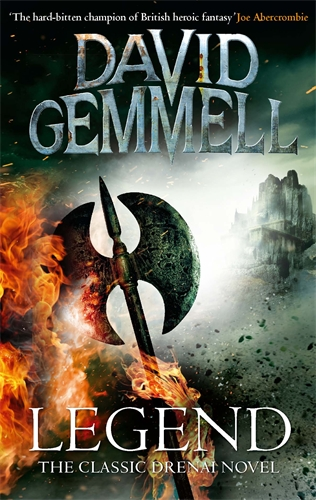
Legend - David Gemmell


I wouldn’t normally choose something quite as… battly, but this one came recommended so I thought I’d give it a try.

The writing style doesn’t have much finesse, but then it was Gemmell’s debut novel, so it’s quite possible he improves over time. Another criticism would be that he really doesn’t understand women – the point of view shifts between characters throughout, and the women are a little odd, to say the least.

That said, the events of the novel are suitably epic, with the odd real-world historical echo in there. The central character, Rek, falls in love with and marries the daughter of an earl, whose fortress is in danger of attack by a vast invading army. He reluctantly joins the siege to defend what is now his family’s holdings, along with the aging legendary warrior Druss.

Gemmell conjures up some interesting concepts, for instance the group of thirty warrior-monks (with the ability to see the future), and toys with ideas of the after-life. To my personal taste, I would have preferred more detail on these, and on the lives of the characters we meet, than so much description spent on military and strategic proceedings and the minutiae of the siege. There were some very gripping action sequences, however, and some touching moments.

All in all, I get the impression that this is a very manly book, with the emphasis on heroic action. Not exactly to my taste, but if that’s what you want, Gemmell’s Drenai series can provide it!


Next up: The Raven in the Foregate by Ellis Peters

Saturday, 19 July 2014

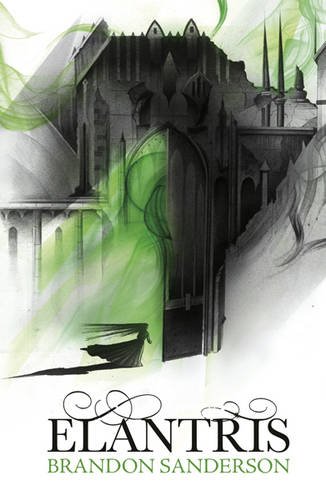
Elantris - Brandon Sanderson


As I’ve mentioned before, I’m a big fan of Brandon Sanderson, so I’ve been really looking forward to reading his debut novel, Elantris. The friend who lent me this novel said he’d thought the language and plot were rather clumsy compared to his later novels, but I have to say I mostly disagree. Admittedly, Elantris has the odd moment where the words chosen or the sentence structure doesn’t feel quite right, but on the whole it’s still really well written. It’s true that Sanderson’s writing becomes more polished as his career progresses, but there is nothing amateurish about this novel.

The titular city was once the glorious home of god-like inhabitants, whose pale skin and white hair shone like silver, and who could perform magic to raise seamless palaces, heal wounds, and create food out of dust. One day, however, the magic suddenly failed, the Elantrians’ hair fell out, and their skin became grey and blotchy. As their magical powers faded away, they were locked in the city to rot, leaving the outside world in the grip of civil war.

The plot begins 10 years after the fall of Elantris, when a foreign princess is brought to the neighbouring city of Kae in a political marriage to unite two kingdoms against an aggressive religious expansion. When she arrives, however, her husband has been declared dead – but in fact has become an Elantrian and been incarcerated in the crumbling city. We follow her efforts to avert civil war, and her husband Prince Raoden’s struggle to survive in his half-life in the dilapidated ruins of Elantris.

As in his later novels, Sanderson treats magic more like a science. It has strict rules and limitations, more like a kind of script-based alchemy than the type of magic used by your average fantasy wizard. He even includes a glossary of symbols at the back. In a nice added touch, each chapter is headed with a symbol indicative of the themes it contains.

Coming to this novel after having read many of his other works, the Mistborn series and Warbreaker in particular (both of which I highly recommend), Elantris feels rather like a testing ground for many of the ideas explored more fully in his later books. It still works perfectly well as a cohesive story, but it does have a cut-down sense to it, leaving me feeling as though I’d like to have more detail on some of the concepts and characters in it. There are echoes of the relationship dynamics and magical systems that form the core of the Mistborn novels, and the enclosed city populated by ‘gods’ is strikingly similar to the basis for Warbreaker.

Elantris is a compelling, intriguing novel that grips you from start to finish, and as a debut novel is even more impressive. If you’re a Sanderson fan but haven’t got round to reading this one yet, do so immediately! And if you’re into any kind of fantasy novels, you’ll enjoy this, I promise.


Next up: Murder on the Orient Express by Agatha Christie