Showing posts with label Agatha Christie. Show all posts

Monday, 11 January 2016

Film adaptation: And Then There Were None

This 3-part BBC adaptation is one of the most faithful novel adaptations I've seen in a while, which I was glad about as Christie's plots are so carefully and intricately thought out that tinkering with them generally makes them less effective. There was a surprisingly star-studded cast considering it was something I'd seen no advertising for (or maybe it's been out there but I just haven't seen any), including Charles Dance, Aidan Turner and Miranda Richardson, as well as Burn Gorman (another, less well-known face from Game of Thrones) and Anna Maxwell Martin.

The scenery of the island was wonderfully bleak and atmospheric, with the intentional contrast of the modern mundanity of the house itself as effective as in the novel. Seeing it all visually for me accentuated the characters' gradual descent into a kind of stress-induced madness, especially, although it might sound odd, in the women. I hadn't really thought about it before, but it seems rare to see middle or upper class women in period dramas in any state other than well-dressed and composed, so seeing the convention of decent dress and presentation gradually break down was very interesting.

In terms of changes, the largest one perhaps was a change from the solution to the murders being a found manuscript in the book to a live confession in the series, which does make sense as being more dramatic and easier to show in visual media. The crimes committed by the 10 guests were also changed for the most part, in a way that made them feel more deliberate and in many cases more violent. My own feeling is that this wasn't strictly necessary, but perhaps it does make the viewer less sorry to see them die as they are more culpable themselves.

Another common alteration to period adaptations that often frustrates me is the addition of sex where it's absent in the book, and this did take place here. I didn't actually mind it, however (and not only because Aidan Turner is very nice to look at), because the characters in question did have a sense of chemistry in the book, and their acting on it in the adaptation served to accentuate the sense of social boundaries and rules breaking down.

I hope I haven't accidentally given spoilers to anyone who doesn't know the story, but I will say it's definitely worth watching, and also reading.

Friday, 8 January 2016

Bonus review: And Then There Were None by Agatha Christie

I've had quite a few Agatha Christies on my bookshelf patiently waiting their turn to be read, but when I noticed the new BBC adaptation of And Then There Were None over the Christmas period I wanted to read the book before watching it.

The premise is pretty well-known: 10 people go to a house on an isolated island, and are killed one by one until they are all dead. In a foreword Christie herself comments on how challenging it was to think up a way to do this, and it really is a very clever and surprising solution.

This is one of the least cosy Christie novels I've read – usually the investigating figure, whoever they may be, is not personally involved in the murder and feels pretty safe in themselves. In And Then There Were None, however, the narrative viewpoint shifts between each of the characters as they become increasingly more aware of their own inevitable demise, which lends the story an unusually serious edge, more like a psychological horror than a comfortable murder-mystery.

The tone remains very grounded and British however, and Christie does a great job creating a variety of distinct but convincing narrative voices. In spite of the fact that they all have quite serious flaws, many of them are likable enough for me to have wished they didn't have to die.

One of Agatha Christie's best-known novels, and well worth a read.


Tuesday, 15 September 2015

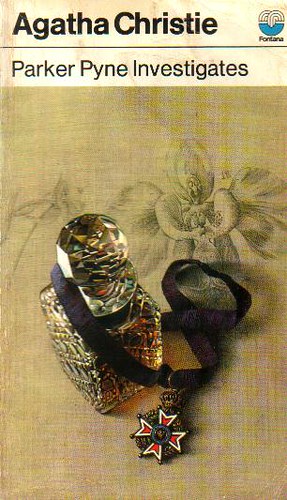
Parker Pyne Investigates - Agatha Christie

Parker Pyne Investigates is more a series of short stories than one novel, featuring Mr Parker Pyne, an ex-statistican who now consults for a living. He claims not to be a detective, and in fact he's almost the opposite of a detective – people come to him unhappy from insecurity in their marriage, dissatisfaction with their lifestyle, or simply out of boredom – and he secretly engineers events which push them in the direction of becoming happier.

The first half of the book has a collection of these 'consultation' stories in London, but the second half follows Mr Parker Pyne on a series of travels around the Middle East, Egypt and Greece, in which he finds himself reluctantly pulled into playing the detective even on holiday.

As a character Parker Pyne feels like a cross between Poirot and G K Chesterton's Father Brown. His apparently haphazard methods and understanding, stolid manner almost always lead to him succeeding somehow, and he takes success or the occasional failure with the same amiable placidity.

This collection of short stories feels almost like an artist's sketchbook, where an idea or concept for one of Christie's more complex plots is briefly sketched out and played with to explore its potential. The stories are amusing, ironic and full of trademark twists and good-humoured melodrama.

Overall, a light, pleasant read for any mystery fan.


Next up: Bridget Jones' Diary by Helen Fielding

Sunday, 13 September 2015

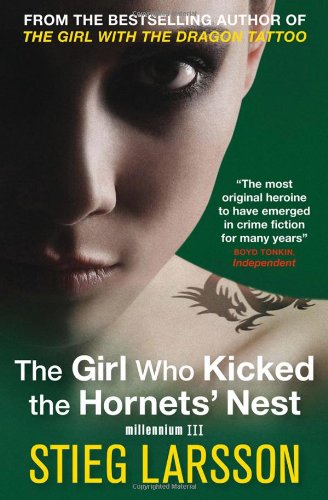
The Girl Who Kicked the Hornet's Nest - Stieg Larsson

Rather longer than the previous novels (at nearly 750 pages in my edition), The Girl Who Kicked the Hornet's Nest finishes off Stieg Larsson's Millennium Trilogy. I don't want to give spoilers for The Girl Who Played with Fire, but I will say that we begin this novel with Salander stuck in a hospital bed and awaiting trial for murder.

Of necessity the majority of the action is done by the other characters in this novel, although Salander proves exceptionally resourceful even from a secure hospital room. Blomkvist races to uncover the truth about Salander and her father, while an underground Swedish secret services cell desperately tries to get her committed once again in order to cover up her father's past crimes.

Once again Larsson's style is clear, direct and gripping. Action and subterfuge merge as we follow the manoeuvres and counter-manoeuvres of the opposing sides, and the emotional and moral ambiguities add a refreshing sense of realism. There is no theatricality about the “bad guys'” point of view sections, only a feeling of people with a different sense of loyalty and priorities. Again the only negative I have, especially having read the trilogy spaced out over several years, is that I found the extensive network of minor characters and their relationships and pasts difficult to recall at times.

The frantic action leads up to the culmination of the trilogy, Salander's trial to try to prove her sanity and innocence once and for all. All the strands carefully woven through the series are pulled together to form a very satisfying legal and personal conflict between Salander and her nemesis Teleborian, who was responsible for her original committal in a psychiatric unit as a child.

This was a gripping, addictive novel – I can't tell you the amount of times I meant to stop reading and just had to read one more chapter. The Girl Who Kicked the Hornet's Nest is a fast-paced story full of big personalities and complex intertwined schemes, coming together to form a tense and dramatic climax.


Next up: Parker Pyne Investigates by Agatha Christie

Monday, 30 March 2015

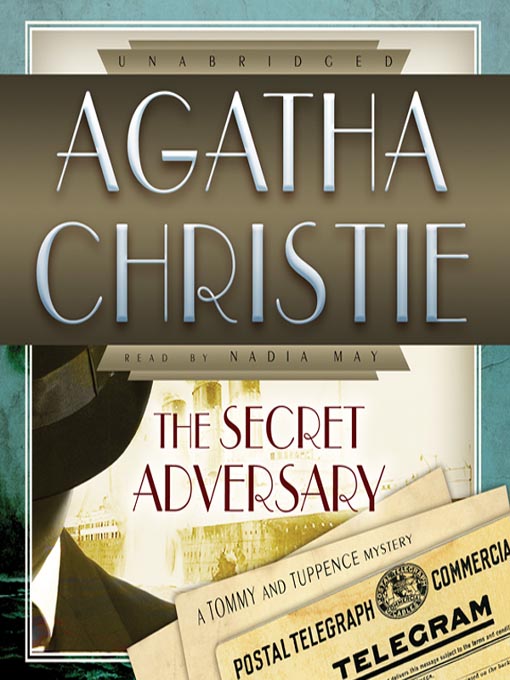
The Secret Adversary - Agatha Christie

The Secret Adversary is a proper old-fashioned adventure story in Agatha Christie form. 'Tuppence' Cowley and her childhood friend Tommy Beresford are unemployed and underfunded following the declaration of peace after World War I, and decide to make their fortunes by becoming adventurers. As luck would have it, their conversation is overheard by a rather suspicious man who offers them an equally suspicious job, and their investigations bring them into contact with an international gang bent on the destabalisation of the British Empire. At its head is the mysterious 'Mr Brown', who none of the gang members know the identity of, but each suspects it is one of his fellows.

Tuppence and Tommy race to find a girl, Jane Finn, who disappeared years ago with the pivotal package of documents on which the gang's plot hinges, with the aid of an imposing King's Councillor and Jane's cousin, an American millionaire.

This story has a fast-paced, light-hearted theatrical feel, with convenient amnesia, hidden document caches, and a high-speed car chase (with guns!). Great fun to read, with a devilishly thought out plot.


Next up: Le Chef-d'oeuvre inconnu by Honoré de Balzac

Wednesday, 25 March 2015

The Big Four - Agatha Christie

This is more a series of mini-adventures than one single novel, in which Hercule Poirot and his devoted friend Hastings try to thwart the plans of an international gang known as the Big Four in the quest for world domination. Despite the global influence of these criminal masterminds, Poirot engages them in a war of minds and strategy that has likely deadly consequences.

The Big Four is one of the most unashamedly entertaining Christie novels I've read, with a Shakespearean penchant for unfathomable disguises, plenty of melodramatic grandstanding, and a few satirical digs at the conventions of mystery-writing.

Seen from the sidekick Hastings' point of view, the reader is kept in the dark for much of the novel, while being given plenty of clues to make guesses at the resolution. A fun, light-hearted read of a detective novel.


Next up: The Secret Adversary by Agatha Christie (the last in this three-novel volume, and I'll move on to something different!)

Saturday, 21 March 2015

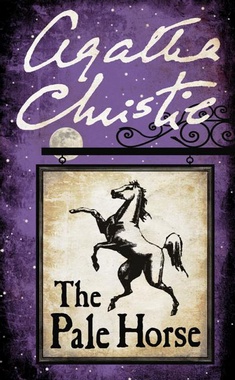
The Pale Horse - Agatha Christie

As detective novels go, this one stands out a long way - sinister, well crafted and very surprising, this has to be one of the most interesting Christie novels I've read so far.

A priest is called to the bedside of a dying woman in London, and comes away with a list of names scrawled on a scrap of paper. He is later found clubbed to death, and the mysterious list is the only clue the police have to solve the puzzle. Mark Easterbrook, an academic struggling for inspiration, gets involved tracking down the killer when his recently deceased godmother proves to be one of the names scribbled down. Every name on the list turns out to have recently died of apparently natural causes.

With his accomplice, a spirited young woman named Ginger, Easterbrook is led to a converted inn called the Pale Horse in a small country village, now the home of three women claiming to have occult powers.

Appearing as a supporting character is Mrs Oliver, a wonderfully satirical self-portrait by Christie of an abstracted, rambling mystery novelist, who lends the story a much-needed light-hearted aspect.

Rather than simply attempting to solve a murder, The Pale Horse plays with ideas of the supernatural and discusses fascinating psychological or psychosomatic concepts. Not only that, but the novel is very cleverly constructed, with oblique hints throughout and layers within layers hiding the answer. Very much recommended!


Next up: The Big Four by Agatha Christie

Wednesday, 18 March 2015

Ross Poldark - Winston Graham

I've had the first 3 novels in this series for a little while now, but the BBC adaptation airing reminded me that I ought to actually read them (or at least the first one) before I watch it.

The titular character, Ross Poldark, returns from fighting in the American civil war to find that his childhood sweetheart is on the brink of marrying his cousin. Plunged into a wave of depression and disillusionment, he cuts himself off from the rest of the family and tries to carve out a life for himself from the ruins of his father's land.

Stylistically, I found this novel a little odd - Graham does an excellent job using the linguistic style of the time period, and his local dialects add a lot of flavour to the text. However, the sense of realism portrayed in the structure of the plot and the sections of unreliable narration during times of great emotion for the characters feel much more modern. Ross Poldark is a convincing historical pastiche language-wise, but tells the story in a modern manner.

It's the start of a typical family saga in that we see the points of view of most of the characters involved, and follow their innermost feelings in great detail for short spaces of time. In that way it reminded me of The Forsyte Saga, in that not very much technically happens, but in a very personal and involving way. The depth and attention to detail in which each character's thoughts are described means that by the end you feel as though you've known all of them personally for a long time.

Now that's finished, I can check out what the BBC adaptation's like!


PS. How fantastic is his matador cape on the cover?


Next up: The Pale Horse by Agatha Christie

Sunday, 8 March 2015

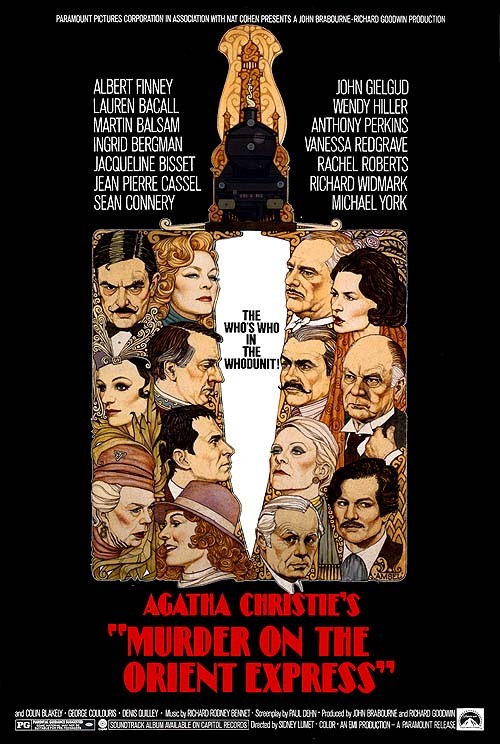
Film adaptation - Murder on the Orient Express

I read the novel quite a while ago, so watching this adaptation was long overdue. I went for the classic David Suchet 1974 version, and I have to say I love the old-style use of dramatic music to highlight key moments. I also liked the slow pace, which reflects the steady information-gathering of the book, and makes a nice change from modern films and TV where the angle or scene cuts once every few seconds.

For me David Suchet is THE Poirot, and Murder on the Orient Express had plenty of the compassion and understated humour that comes across in the novels. The slower, lingering shots added a wonderful sense of atmosphere.

Appearances by many other talented actors and Christie's signature plot twists made this an entertaining and engaging film to watch, even knowing the ending already. Good gentle fun, a long way from more recent (in my opinion rather stressful) gritty realism.

Saturday, 7 March 2015

World Book Day


In honour of the recent world book day (that's a good enough reason, right?) I did a little book shopping. As well as a promising-looking murder mystery set in the 20s I came away with 3 vintage-facsimile hardback Agatha Christies - I just love those covers.

Did anyone else do or pick up anything nice for world book day?


Tuesday, 21 October 2014

A few murder mysteries

I've got this week off work, and on the way back from a food shop I took a look in the charity shops to see if there were any books that appealed. This is today's chosen few:

A Rare Interest in Corpses by Ann Granger
Endless Night by Agatha Christie
Snow Falling on Cedars by David Guterson

I'm always interested in more Christie novels, and people have been telling me to read Snow Falling on Cedars for some time. At least, I think so, unless I've got the name confused with something else. The blurb sounded good, anyway.

Thursday, 16 October 2014

The Seven Dials Mystery - Agatha Christie


This Agatha Christie novel has a charmingly light-hearted tone reminiscent of P G Wodehouse. The heroine and detective is Lady Eileen Brent, ‘Bundle’ to her friends, who gets caught up investigating the murder of a young man who was killed in her own bedroom while the house was being let to a steel magnate. Her discoveries lead her to the mysterious Seven Dials secret society, and in true Christie style, the ending turns our preconceptions on their heads.

The cosy, jolly style makes this book very readable, and plenty of amusing social situations and misunderstandings occur. Our suspicions shift constantly, and Christie keeps you guessing right until the big reveal. Great fun to read, and much lighter in feel than many of her novels.


Next up: Touch of Power by Maria V Snyder

Friday, 10 October 2014

Vathek - William Beckford


Another Gothic novel, this one from 1786. It has more of an exotic flavour than The Castle of Otranto, being set in a fictional Eastern land at an undisclosed time in history, ruled over by Caliph Vathek.

Vathek is an insatiably curious ruler, so when a hideous stranger comes to him promising to reveal to him antiques of incredible power and rarity, he’s intrigued and offers the man the entirety of his treasury for these valuables. After making the trade, however, the stranger angers him and is thrown out, leaving him with a growing obsession.

The previously admired and loved ruler gives up all interest in ruling his land, instead abusing his power to commit acts of atrocity demanded by the stranger as entrance requirements to his palace of wonders. We see Vathek’s transformation from an eccentric ruler to a corrupted madman and the ruin he brings to all around him.

This was an interesting story about the triumph of ambition over morality, heavily flavoured by exotic eastern imagery and religion.


Next up: The Seven Dials Mystery by Agatha Christie

Thursday, 2 October 2014

Books for illness

This week's Booking Through Thursday is:

What do you read when you’re sick and just want something easy and comforting? Or do you watch TV instead? (Assuming you’re not napping, of course.)


I try to only have one book going at once, so usually if I get ill I'm stuck with whichever book I was reading anyway. The kind I enjoy most when I'm feeling run down are nice, reassuring books - something in a series or by a prolific author, where you know what to expect. Regency society comedies along the lines of Jane Austen make for lovely, relaxing escapism. Safe, forgiving murder mysteries like the Cadfael series or Agatha Christie are great for distracting you more gently than the modern, gritty style.

How about you? What are your favourite books when you're feeling ill?

Sunday, 7 September 2014

A substantial addition


Thanks to a combination of some books passed on to me by a friend, and a totally necessary visit to an Oxfam bookshop on the way back to the station, my trip to Bath yesterday has increased by collection quite a bit. Plus I got to eat a meringue the size of my face - always a bonus.

Today's haul consists of:
The World According to Bob by James Bowen
An Arsène Lupin Omnibus by Maurice Leblanc
Armadale by Wilkie Collins (the only fictional novel by him that I haven't read yet, I think)
Parker Pyne Investigates and The Seven Dials Mystery by Agatha Christie
The King's Evil and The Repentant Rake by Edward Marston
Cool Repentance by Antonia Fraser
Scorn with Added Vitriol by Matthew Parris (I was disappointed to find out that it wasn't written by this one)
The first 3 novels in the Poldark Saga by Winston Graham
The Herb of Grace by Elizabeth Goudge
A Twist of Fate by Joanna Rees
The Secret Between Us by Louise Douglas
All Manners of Food by Stephen Mennell (a history of food and tastes throughout the ages, apparently)

Not bad - a bit of a random selection, but the majority were free and there's a good bit of detective and historical stuff in there.

Sunday, 20 July 2014

Murder on the Orient Express - Agatha Christie

Murder on the Orient Express seemed like apt reading material for the 6-hour train journey to my graduation ceremony at the weekend, although it did make me long for the lovely old-fashioned trains portrayed in the book, instead of the crowded, greasy and boiling hot ones I was stuck on at the time.

We begin with Hercule Poirot travelling back to London, after solving a case in Syria. He plans to break his journey for three days exploring Stamboul (or Istanbul, as we now know it), but receives an urgent telegraph to return home immediately. He bumps into a friend of his who happens to be a director of the railway company owning the Orient Express, who pulls some strings and gets him a last-minute berth in an unseasonably crowded train bound for London.

Once on the train, he meets a couple of his former travelling companions, who seem now to be avoiding one another, as well as making the acquaintance of the diverse range of other passengers on the carriage. After a day or two of travel, the train is halted by a snowdrift, and in the morning one of the passengers is discovered murdered. Trapped on a train with the murderer, and without the facility of telegramming for further information about his suspects, Poirot must puzzle out the identity of the culprit using his deductive powers alone.

As usual with Agatha Christie, the plot keeps you guessing throughout, and I felt rather smug at having spotted a pivotal clue at the time it happened. Naturally, the conclusion is rather contrived compared to modern, gritty detective dramas, but that’s one of the great things about Christie’s novels – you have the pleasant sensation of sitting safely outside the action, watching what’s going on and wondering about the solution.

Hercule Poirot’s warm, amiable character and strong sense of compassion and humour is also a nice contrast from other early detective fiction, for instance Sherlock Holmes’ cold intellectual logic. For Holmes each crime is simply a puzzle to be clinically solved and the culprit handed over to the authorities for justice, but Poirot sees each suspect as a human being, and uses this to his advantage when making his deductions.


Next up: Legend by David Gemmell

Saturday, 19 July 2014

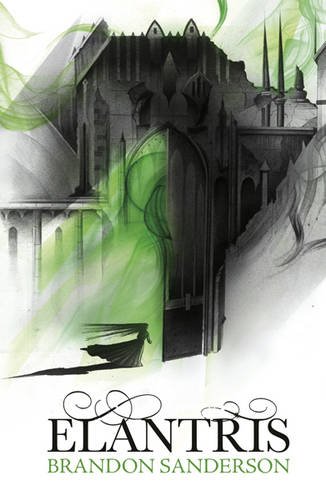
Elantris - Brandon Sanderson


As I’ve mentioned before, I’m a big fan of Brandon Sanderson, so I’ve been really looking forward to reading his debut novel, Elantris. The friend who lent me this novel said he’d thought the language and plot were rather clumsy compared to his later novels, but I have to say I mostly disagree. Admittedly, Elantris has the odd moment where the words chosen or the sentence structure doesn’t feel quite right, but on the whole it’s still really well written. It’s true that Sanderson’s writing becomes more polished as his career progresses, but there is nothing amateurish about this novel.

The titular city was once the glorious home of god-like inhabitants, whose pale skin and white hair shone like silver, and who could perform magic to raise seamless palaces, heal wounds, and create food out of dust. One day, however, the magic suddenly failed, the Elantrians’ hair fell out, and their skin became grey and blotchy. As their magical powers faded away, they were locked in the city to rot, leaving the outside world in the grip of civil war.

The plot begins 10 years after the fall of Elantris, when a foreign princess is brought to the neighbouring city of Kae in a political marriage to unite two kingdoms against an aggressive religious expansion. When she arrives, however, her husband has been declared dead – but in fact has become an Elantrian and been incarcerated in the crumbling city. We follow her efforts to avert civil war, and her husband Prince Raoden’s struggle to survive in his half-life in the dilapidated ruins of Elantris.

As in his later novels, Sanderson treats magic more like a science. It has strict rules and limitations, more like a kind of script-based alchemy than the type of magic used by your average fantasy wizard. He even includes a glossary of symbols at the back. In a nice added touch, each chapter is headed with a symbol indicative of the themes it contains.

Coming to this novel after having read many of his other works, the Mistborn series and Warbreaker in particular (both of which I highly recommend), Elantris feels rather like a testing ground for many of the ideas explored more fully in his later books. It still works perfectly well as a cohesive story, but it does have a cut-down sense to it, leaving me feeling as though I’d like to have more detail on some of the concepts and characters in it. There are echoes of the relationship dynamics and magical systems that form the core of the Mistborn novels, and the enclosed city populated by ‘gods’ is strikingly similar to the basis for Warbreaker.

Elantris is a compelling, intriguing novel that grips you from start to finish, and as a debut novel is even more impressive. If you’re a Sanderson fan but haven’t got round to reading this one yet, do so immediately! And if you’re into any kind of fantasy novels, you’ll enjoy this, I promise.


Next up: Murder on the Orient Express by Agatha Christie