Showing posts with label short stories. Show all posts

Tuesday, 15 September 2015

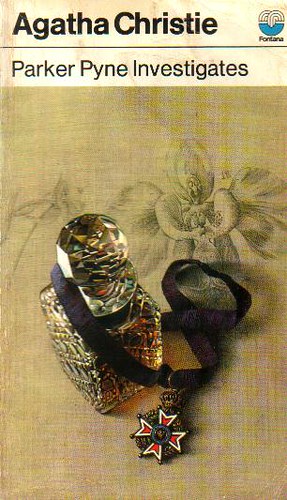
Parker Pyne Investigates - Agatha Christie

Parker Pyne Investigates is more a series of short stories than one novel, featuring Mr Parker Pyne, an ex-statistican who now consults for a living. He claims not to be a detective, and in fact he's almost the opposite of a detective – people come to him unhappy from insecurity in their marriage, dissatisfaction with their lifestyle, or simply out of boredom – and he secretly engineers events which push them in the direction of becoming happier.

The first half of the book has a collection of these 'consultation' stories in London, but the second half follows Mr Parker Pyne on a series of travels around the Middle East, Egypt and Greece, in which he finds himself reluctantly pulled into playing the detective even on holiday.

As a character Parker Pyne feels like a cross between Poirot and G K Chesterton's Father Brown. His apparently haphazard methods and understanding, stolid manner almost always lead to him succeeding somehow, and he takes success or the occasional failure with the same amiable placidity.

This collection of short stories feels almost like an artist's sketchbook, where an idea or concept for one of Christie's more complex plots is briefly sketched out and played with to explore its potential. The stories are amusing, ironic and full of trademark twists and good-humoured melodrama.

Overall, a light, pleasant read for any mystery fan.


Next up: Bridget Jones' Diary by Helen Fielding

Friday, 3 April 2015

Le Chef-d'oeuvre inconnu - Honoré de Balzac

Balzac's short story Le Chef-d'oeuvre inconnu (The Unknown Masterpiece) was followed by a bonus even shorter story, La Leçon de Violon (The Violin Lesson) by E T A Hoffman.

I found Le Chef-d'oeuvre innconnu quite heavy going to begin with – it mostly seemed to be a discussion on artistic philosophy disguised as a conversation between Frenhofer, an elderly, gifted artist, and two younger painters, made even denser by the language barrier. Until the last few pages I thought that would be it, but the surprising and touching ending made up for it.

The two young painters are intrigued by their older friend's enthusiastic talk of his masterpiece which has taken him 10 years to complete, but which he won't allow anyone to see. When he finally allows them to view it, it turns out that spending so long on one picture has completely distorted his view, and that what was once a wonderful painting is ruined. When the young friends break this to him, he collapses down in misery. One of them returns the next day to check on him, and it turns out he passed away in the night, after having destroyed his entire works.

Having pushed through and finally finished the story, I could see that the rather dull majority of it was necessary for the effect of the final scene. However, I can't help but feel that a smaller quantity of the philosophical discussion would have been fine for building up the suspense for the final reveal.

La Leçon de Violon was more approachable, if also rather shrouded in artistic philosophy. A promising young violinist is introduced by his tutor, Haak, to Haak's own patron, a baron who was once one of the foremost violinists of the age. After an extended theoretical and philosophical speech (again), the baron allows the narrator to try out his own antique violin. Frustrated with his lack of technique, he shows him how it's done – except that his ability to play has completely disappeared, and only his belief in his own genius remains.

Both stories were interesting studies of human nature, although I can't help feeling they'd be more interesting if I actually cared much about artistic theory.


Next up: The Chronicles of Thomas Covenant, the Unbeliever by Stephen Donaldson

Thursday, 19 February 2015

Collections

This week's Booking Through Thursday is:

Do you prefer to read collections that are all of works by the same author? Or collections by different writers? Consistency or variety?

 I don't really enjoy short stories in general because they don't give me that sense of in-depth immersion that helps me to really enjoy a book. The only exception I've found so far is Michael Marshall Smith's collection of (very) short stories, What You Make It, some of which are only a couple of pages long, but all are so cleverly written that the ideas stay with you for quite a while.

Usually, the only collections I'd consider reading are either poetry collections (and I prefer those to be by the same poet or at least arranged around a consistent theme) or collections of stories about the same character, for instance Sherlock Holmes stories or The Complete Father Brown Stories. That way you still get a sense of continuity and depth as the short stories build upon each other, rather than starting fresh at the beginning of each new one.

For me getting just a few minutes' worth of a story feels unsatisfying - if it was a good idea I wish it'd been taken further and turned into a full novel.

Monday, 19 May 2014

Rumpole à la Carte - John Mortimer


This was my first foray into the Rumpole series, but I found that, apart from the occasional (footnoted) reference to the events of previous stories, it didn’t really spoil my enjoyment. Characters are introduced succinctly but enough that you get the gist of their personality, even if they’re new to you.

Rumpole’s narrative voice is slightly pompous, but benevolently sarcastic and willing enough to laugh at himself as well as others. It reminded me rather of P G Wodehouse, whose narrators manage to turn trivial events into amusing anecdotes. While each short story centres around the conclusion of a court case he’s involved in, the settings and characters vary enough to maintain interest, and the narrator remains likeable throughout.

It’s not the book to read if you’re looking for excitement, but it is a charming and amusing set of short stories, ideal to dip into with a cup of tea and guaranteed to leave you in a good mood.


Next up: The Final Sacrament, by James Forrester

Friday, 28 March 2014

The Complete Father Brown Stories - G K Chesterton

I can't believe it's actually taken me a month to finish this book, although in my defence I did work a lot, and it is a very long book. Each story varies between about 10-20 pages, but the complete collection weighs in at almost 800 pages.

I'm not normally a fan of short stories (the only collection I've really enjoyed is Michael Marshall Smith's What You Make It). My reason for disliking most is that they lack a sense of depth and continuity, the ability to get lost in them, which is my main motivation for reading fiction in general. The Father Brown Stories, however, obviously have continuity, because they're a set of stories about the same character. Each mini-mystery manages to set the scene so effectively that, even after 15 pages, you feel as though you've lived a full novel in the setting.

G K Chesterton also has a gift for pithy and amusing character description - a good example is:

He saw Dr Simon, a typical French scientist, with glasses, a pointed brown beard, and a forehead barred with those parallel wrinkles which are the penalty of superciliousness, since they come through constantly elevating the eyebrows. (from 'The Secret Garden')

His ability to effectively describe a character or place in one sentence in a way that really evokes them is what, for me, really sets these stories apart. The mysteries themselves vary in their complexity and convincingness, but are always solved with a wonderful sense of humanity and compassion. Most other detectives I remember reading about see the crime as a cold, set puzzle to be solved analytically and the criminal mercilessly packed off to gaol, if they haven't already been killed in some way. Father Brown, however, solves a crime by imagining the type of person who would do such a thing, putting himself in their place, and working from there. When he's discovered the criminal, he often lets them escape rather than dragging them in to face the full force of the law. He even converts a world-reknowned thief to the side of justice and remains fast friends with him throughout the series.

I wouldn't necessarily recommend reading the entire set of stories back-to-back (unfortunately I feel compelled to read books that way, but I'm not sure it's the way to get the best out of short story collections), but I'd definitely recommend them as something to dip into. Each story is atmospheric and the pervading sense of compassion gives a much more optimistic feel that that found in most detective stories.

Next up: The Eyre Affair, by Jasper Fforde