Showing posts with label Georgette Heyer. Show all posts

Thursday, 18 February 2016

Automated Alice - Jeff Noon

Automated Alice is essentially Alice's Adventures in Wonderland in a cyberpunk universe. A little Victorian girl named Alice is bored with her humdrum existence, and is transported through a grandfather clock to the future, or at least to 1998, which was the future in 1996 when the novel was published. Once there she meets her Twin Twister, a life-size embodiment of her favourite doll Celia, who has been animated by an inventor and joins Alice on her quest to get home.

Alice is under suspicion for the famous Jigsaw Murders, in which the victims are found dismembered and stitched together in a nonsensical fashion. They are found with one jigsaw piece each, all of which are missing from Alice's jigsaw puzzle in the past. She and Celia decide that the only way to get home is to retrieve all of the missing puzzle pieces, while evading the clutches of the police.

In many ways Automated Alice feels like it ought to be a children's book – it's told in a matter-of-fact, childlike voice and even has wonderfully quirky full-page illustrations, as well as smaller doodles throughout. There are aspects, however, like the practical but detailed way in which the murder victims are described, that would be very much out of place in a children's book. Noon keeps the dreamlike feel of Carroll's original and applies it to his own, more modern universe found in Vurt and Pollen (and later Nymphomation) to create a very readable, but very unsettling, atmosphere.

The novel questions the boundaries of fantasy and reality in a way I'm sure Carroll would have approved of. Alice meets an authorial figure, Zenith O'Clock, who has a very existential conversation with her questioning whether she represents the Alice known in real life by Carroll, the Alice in the book he wrote, or another Alice entirely. A cameo appearance by Lewis Carroll himself increases the blurring of lines.

For those who have read Noon's other novels, Automated Alice offers some interesting theories about the background to the culture he's created which set Vurt, Pollen and Nymphomation in a different light.


Next up: The Masqueraders by Georgette Heyer

Monday, 22 June 2015

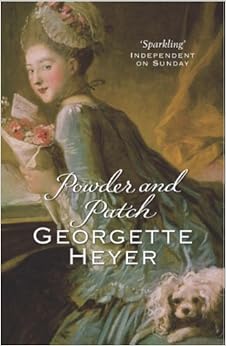
Powder and Patch - Georgette Heyer

In this short romantic comedy, Philip Jettan, heir to a country estate, is told by his childhood sweetheart that he is too unsophisticated and boorish, and that he must go to town to become a real gentleman or she will not have him. Reluctantly he travels to Paris, where (somewhat implausibly) he takes naturally to French fashion and court gentility and is a great social success. On his return, his beloved Cleone barely recognises the new, polished Philip, and he has to win her approval all over again.

Although rather a contrived, unconvincing plotline, Powder and Patch is full of witty dialogue and has some very funny scenes, particularly with the role-reversal of the couple when Philip returns to England. Heyer's usual warmth and humour brings the characters to life and makes them all likeable and enjoyable to read about.

An amusing little novel, great for picking up if you fancy something light and quick to read.


Next up: Stephen Fry in America by Stephen Fry

Sunday, 21 June 2015

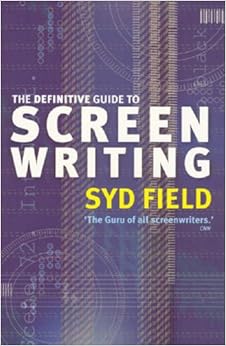
The Definitive Guide to Screenwriting - Syd Field

I began this book completely uneducated as to screenwriting – I'd watched and enjoyed films, but had no idea what went into the process of crafting them. Field starts out by explaining the basics of film structure and theory (very useful if, like me, you're a total beginner), then goes on to dedicate individual chapters to specifics like character, plot, and each section of the film. He finishes by explaining the process of turning a freshly-written screenplay into an eventual film, which again was very useful new information for me.

Field has an open, conversational style that makes for approachable reading and ease of understanding. I did find that some points felt rather laboured, and that he takes a rather didactic tone (sometimes it felt like I was being told what to think and feel, as well as what to do, during the screenwriting process), but on the whole this was very engaging and pleasant to read considering it is, essentially, a textbook.

As my own background is in literature, it was especially interesting for me to see the very different methods by which a screenplay must tell a story – by showing only the external, in particular tiny details that would be implicit in a novel – as opposed to the forms I'm more used to, where the reader is usually privy to what goes on in the protagonist's head, and any external cues we're given are those perceived specifically by that character.

I couldn't help but feel a bit annoyed by Field's assertion that for a film adaptation of a novel “you are not obligated to remain true to the original material.” I can see that there are great challenges involved in transferring a story from one medium to another (more than I'd appreciated before reading this book), but I, and probably many others, are familiar with that sense of disappointment that comes when you see a much-anticipated screen adaptation of a beloved novel and it just isn't the same, it doesn't capture what you loved about the book at all. In my opinion there's nothing wrong with a screenwriter reading a novel and feeling inspired to write a screenplay on a similar theme – just please, please, unless you're willing to be faithful to the original, don't label it as an adaptation.


Next up: Powder and Patch by Georgette Heyer

Saturday, 27 September 2014

The Grand Sophy - Georgette Heyer

Having not really enjoyed Cousin Kate, I was pleasantly surprised by The Grand Sophy. The titular heroine, Sophy Stanton-Lacy, stays with her aunt, uncle and cousins in London while her father, Sir Horace, is travelling in Brazil. Of course, she refuses to fit in with conventional polite society, but ends up changing their lives for the better.

Sophy is a likeable (if exhausting), confident and well-meaning main character, and we are given a villain you love hating in her cousin’s sly and manipulative fiancée, Miss Eugenia Wraxton. Also included in the colourful cast are a wonderfully distracted poet and a pompous know-it-all suitor. No character misses out on their share of amusing quirks, and the convoluted schemes Sophy comes up with lead to some really bizarre and funny situations.

This is Heyer at her best – sparkling, light-hearted and full of fun.


Next up: Guard your Daughters by Diana Tutton


Saturday, 20 September 2014

The Kite Runner - Khaled Hosseini


This one is quite simply incredible. I don’t normally choose to read things just because they’re popular, but I really can see why The Kite Runner became the best-seller it is.

It tells the story of the young boy Amir and his friend Hassan, the son of his Hazara servant. We see them growing up together, their separation, and how their destinies ultimately intertwine. This very personal, human story is set against the harsh inhumanity of the Afghan war, from which Amir escapes as a teenager, and revisits the country later in life.

Hosseini’s stark, direct style somehow conjures up vivid images far more effectively than florid description could have done, and what is left unsaid is at least as important as what is stated openly. Hope and love go hand-in-hand with searing heart-break throughout, sometimes even within the same paragraph.

The use of foreign words in the text, for food, clothing, religious terms, and so on, isn’t intrusive or confusing, and very much adds to the flavour of the novel. On a personal level, I grew up with family friends from the Afghan area, and filling in some of the blanks about the dangers and hardships they’d seen and escaped from on coming to the UK really hit home for me.

As I’ve said before, I don’t usually go for modern novels, especially those with a political or war-based setting, but this one’s amazing. If you haven’t already read it, do so. You won’t regret it! (Unless it makes you burst into tears in public, that could be awkward. Try not to do that.)


Next up: The Grand Sophy by Georgette Heyer

Monday, 28 April 2014

Cousin Kate - Georgette Heyer


This is an odd one, because it’s historical fiction, written almost 50 years ago. Part of me thought that it might closely resemble modern historical fiction, but that part of me was wrong.

Nowadays historical fiction often tries to focus on realism, on capturing the mindset and atmosphere of the people living at the time. Heyer, however, simply transplants a plucky 60s young woman into the nineteenth century, making her an unfeasibly attractive and outspoken penniless governess. Kate is invited to stay with her rich aunt Lady Broome and her admittedly odd cousin, Torquil, and discovers various dark family secrets along the way.

Virtually every character in this novel speaks in a bizarre kind of slang, which I initially assumed was common 60s slang, but The Sunday Times claims that it is “slang beautifully rendered” – presumably regency slang, or the contemporaneous idea of it. Having lived through neither the regency period nor the 1960s, I can’t say for sure, but it feels a bit jarring to me.

That said, it’s an amusingly melodramatic romance, and a fun light read.

Next up: The Way of Shadows, by Brent Weeks

Sunday, 27 April 2014

Fire - Kirsten Cashore


The first thing I have to say is that this book deserves a better cover. The Gollancz version (the one I read) is your typical teen-fantasty ‘girl-with-weapon-standing-on-rock-with-mystic-looking-background’ image. And the part that grates with me most is the fact that, if the image is actually trying to reference any part of the book, the dress should be purple, not red. 

The Dial YA version of the cover is better, featuring a bow and arrows rather than lady-in-dress, and I really like the understated originality of the Clarsen YA German edition.
 

Inside, Fire is anything but your average YA fantasy novel. The usual elements are there – insular non-time-specific low-tech kingdoms, magical powers, and so on – but Cashore takes it so much further. The protagonist, Fire, has a complexity to her sexual past which is refreshing compared to the coyness YA novels often have about sex. It helps the reader to see her as a rounded human being, rather than a copy-and-pasted heroine. The intricacy of the relationships between all of the characters in this novel is really well done, and leads to some truly surprising and touching moments.

Naturally, Fire does have special powers – what self-respecting fantasy heroine doesn’t? She was born a ‘monster’, a genetic aberration possible in any species, which gives the individual very bright colouring and unnatural beauty, and the power to influence the minds of those around them. Making your heroine inhumanly beautiful is a tricky thing to pull off without making it all feel like a giant piece of wish-fulfillment, but Cashore manages it. Fire sees her appearance as a disadvantage in most situations, and never truly comes to accept it as an integral part of who she is, not even by the end. Cashore also considers the logistics of Fire’s condition; ‘monsters’ are cannibalistic and lust after each other’s blood, which means that she is constantly attracting ‘monster’ insects and that she can’t leave the house when on her period without being mobbed by raptors.

Another aspect I really liked about this novels is that Fire isn’t the be-all-and-end-all of everything. Of course, as the protagonist, she does lie at the centre of the story, but she is only involved in a very small part of the events taking place. The fact that she recognises her insignificance amid grand political schemes and the war sweeping the kingdom adds a sense of perspective not often found in fantasy novels.

Overall, I really enjoyed this one, and am looking forward to reading the other two in the trilogy, Graceling and Bitterblue.

Next up: Cousin Kate, by Georgette Heyer


Saturday, 1 March 2014

Book haul

I've just been to Bath for the day, and came back full of delicious food and a bag of second-hand books I really shouldn't be spending money on, but just can't resist.

Today's haul cost just over £5 and consists of Georgette Heyer's Cousin Kate and The Grand Sophy, Larry Niven's Ringworld, and Theodore Dreiser's Sister Carrie. Now to find space on my bookshelves!