Showing posts with label science fiction. Show all posts

Monday, 17 November 2014

Brave New World - Aldous Huxley


I’ve been meaning to read Brave New World for years, and I wish I’d done so sooner – this novel is intriguing, disturbing and surprisingly engaging as well. The reader is shown round a world in which technological progression has reached the point at which babies are replicated in bottles, growth stunted or assisted according to their destined caste, and then conditioned as children to believe as their caste should. Everybody is happy because they have no wish to be anything other than they are – and when they are unhappy, there is the intoxicating drug soma to distract them for a while.

Bernard Marx, however, is a misfit, trying to reject the ideals of instant gratification and mindless enjoyment and to think, and feel, for himself. When he brings a ‘savage’ back from a reservation outside their utopia, questions start to be asked and human passions begin to cause turmoil in the stagnant, content society.

The main characters are well-developed and interesting, as well as the overarching ideas, and the way Huxley’s society in this novel views the human past with revulsion forms a challenging reversal of viewpoint. Brave New World strikes a disturbingly relevant note in our own increasingly materialistic, instant-gratification-demanding world, and really makes you rethink your values.

Overall, very thought-provoking and well worth a read, if you haven’t already. Also, I have no idea what's meant to be on the cover of my edition. I think I can see a face, but maybe I'm just imagining it? Guesses welcome below!


Next up: The Face of a Stranger by Anne Perry

Monday, 14 April 2014

The Island of Dr Moreau - H G Wells


The Island of Dr Moreau is only a short novelette, but, like most of H G Wells’ stories, is thought-provoking and has a lot to say about human nature meeting scientific progress.

The narrator, Edward Prendick, is marooned on an island – human population two: Dr Moreau, whose controversial work got him exiled from England, and his assistant, Montgomery. He soon discovers that Moreau is conducting experiments on animals to transform them into a hideous semblance of humanity. He moulds them, both in body and mind, into disfigured creatures which are not quite animal and not quite human.

This being H G Wells, Dr Moreau’s work backfires, resulting in disaster. We return to London with Prendick, who is a changed man, unable to see anything other than beastly echoes in his fellow humans.

It’s told in Wells’ usual matter-of-fact, documentary style, which lends a solidity and a sense of uneasy realism to the horrors described. The narrator’s disillusionment with humanity has an echo of Gulliver’s Travels, although for different reasons.

A good short tale to dip into, which left me mulling over ideas for some time afterwards.


Next up: The Lovely Bones, by Alice Sebold

Wednesday, 2 April 2014

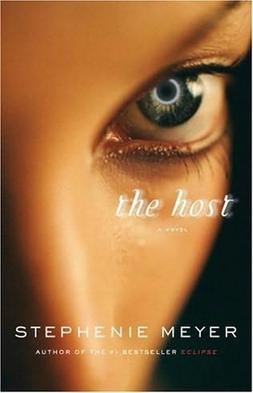
The Host - Stephenie Meyer


I don’t normally like to post mean reviews, but at this point I think Stephenie Meyer is rather too rich to
care, and is probably quite used to receiving hate mail as well as the locks of hair and used underpants belonging to overexcited and slightly confused young women who think she keeps Edward Cullen somewhere on her person.

Admittedly, The Host is better than Twilight. Significantly better, in fact. The plot actually sounds promising: an alien invasion by parasitic creatures that attach to the spines of their hosts and continue to live their lives as normal until virtually the whole planet is taken over, leaving only tiny pockets of still-human resistance. The narrative is told by one of the alien consciousnesses themselves, which is also an interesting concept.

However, it’s at this point that promising sci-fi originality goes out of the window and Meyer’s compulsion to turn everything into a vapid teen romance steps in. Instead of choosing one of the many interesting potential avenues, Meyer focuses on our alien protagonist Wanda and her human host Mel’s inner girlish arguments, and on the fact that Wanda appears to have inherited Mel’s love interest in her boyfriend Jared.

Wanda decides to search for Jared and her brother Jamie, who are sheltering in a cave in the desert. She’s taken prisoner by the community Jared and Jamie have joined, and, now that Mel’s been taken over by the enemy, Jared is full of hatred for her and immediately proclaims that she should be killed. Although Wanda and Mel manage to gradually win over the trust of most of the community, Jared is staunch in his opinion, and even hits her several times, giving her noticeable injuries and facial scarring. She continues to try and gain his trust by putting herself last in everything and generally acting like a doormat, refusing to stand up for herself even to save her own life. Just as women should do in the face of domestic violence, apparently. Thanks for that, Meyer.

Despite the advances of attractive nice guy Ian, who has come to like Wanda for who she is now rather than Mel as she was previously and acts as protector and comforter to her, both Wanda and Mel cling to their desperate love for the man who quite literally wants to murder them for the majority of the novel. I was worried, given the fact that virtually the same situation happens in Twilight (ie. Edward literally wanting to kill Bella most of the time, and I’m-your-totally-platonic-friend Jacob doing everything for her and being off-handedly rejected for not being her true love), that the Wanda-Mel composite would end up somehow living happily ever after with the violent unpleasant Jared.

However, after telling her that, “You are the noblest, purest creature I've ever met. The universe will be a darker place without you,” (a compliment she was clearly fishing for from the very beginning of the novel), her friends collude to transplant her consciousness into a vacant body (another young, attractive female, obviously), conveniently saving her the trouble of going through with her difficult decision to leave Mel her own body back at Wanda’s expense. Wanda and Ian can live happily ever after, and Mel is lucky enough to have her boyfriend back – the one who weeks ago beat her repeatedly and wanted to kill her. Lucky, lucky Mel. But apparently he’s hot, so that’s what matters.

So, um, yes. Always submit meekly to your one true love, even if he beats you and threatens to kill you, and everything will be ok, until you… get transplanted into someone else and can have the nice guy? I’m still quite confused about the message I’m getting from this one.


Next up: Heartstone, by C J Sansom

Wednesday, 26 February 2014

The Time Traveller's Wife - Audrey Niffenegger


You know that sensation when it’s hard to think clearly about a novel because you still feel lost in the world it creates? That's how The Time Traveller’s Wife has me feeling right now. I have to admit that it’s because of the film adaptation that I read it – I would probably never have considered it if I hadn’t seen it plastered all over buses a couple of years ago. The film looked interesting, and I always like to read the book before I see a film adaptation, so I’ve been looking out for it since.

The Time Traveller’s Wife focuses on the relationship between Clare and Henry, as he struggles with his unusual condition of epilepsy-like time travel. That is to say, at any moment, particularly during times of stress, he may have a fit of sorts, disappear, and reappear in an unpredictable time period and location.

Niffenegger deftly avoids creepy Humbert Humbert-like insinuations as Clare grows from a child to a young adult with Henry as her frequent visitor, coming from different periods of time in his own life. When they meet in real time, their life together is sometimes happy, sometimes challenging, and occasionally heartrendingly painful, but always believable and carries a sense of immediacy that has you feeling as though you know the characters in real life.

I sometimes find novels written in the present tense harder to get on with, but I think in this instance it really works – where time travel is concerned, the present tense really brings home the fact that this is happening, here and now, in the present. While at first it feels a little slow, it gathers momentum as it progresses, and you find yourself drawn in by the weight of inevitability as the story draws to a close and all the pieces come together.

I’m still not sure which genre it falls into – usually anything involving time travel can be comfortably classed as ‘science fiction’, but Niffenegger takes the idea and creates something wonderfully human and compelling. The Observer’s description on the cover, of The Time Traveller’s Wife as “an old-fashioned love story” made me a little dubious at first, but it’s true, in the best sense – there’s no clichéd sentimentality to be found, only two people struggling to come together and live a happy life in spite of all their obstacles.

I can’t compare it with the film because I haven’t watched that (yet – I plan to redress this shortly), but I will say that, if you did enjoy the film, read the book! And if you haven’t seen the film either, read the book anyway.

UPDATE: I have now watched the film!

Next up: The Complete Father Brown Stories, by G K Chesterton

Saturday, 8 February 2014

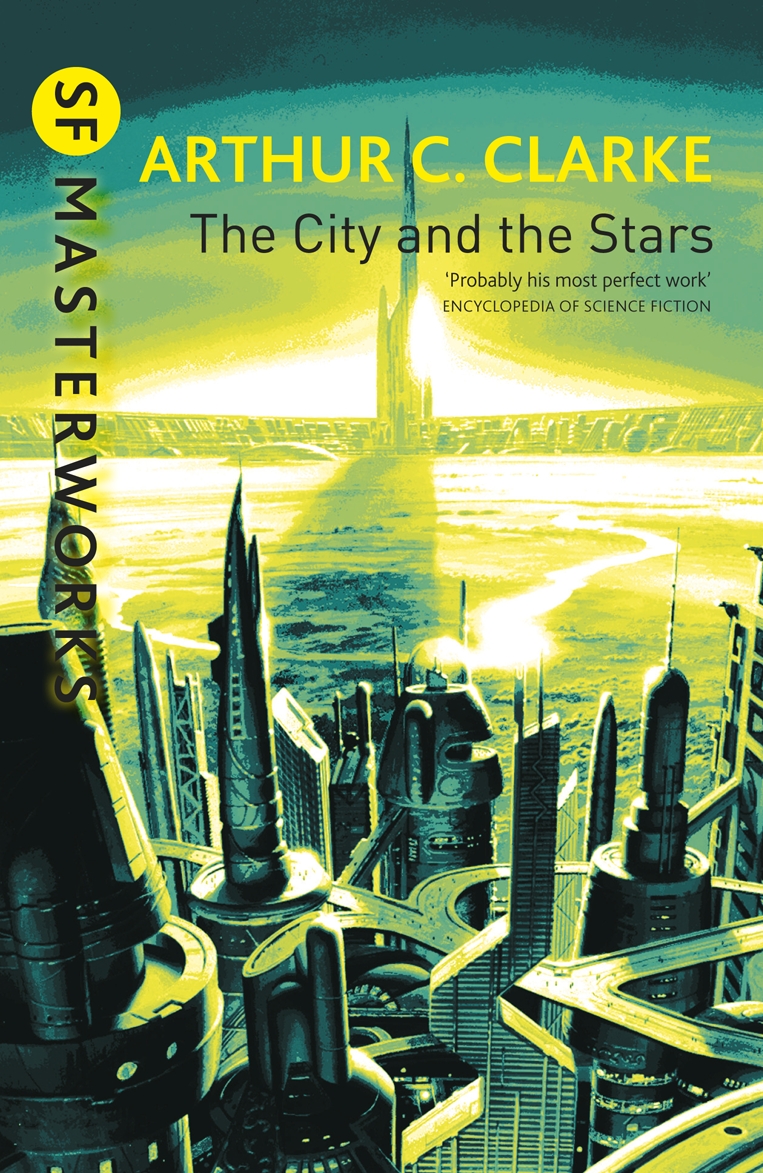
The City and the Stars - Arthur C Clarke


I’ve always loved early sci-fi for the sense of originality and exploration it gives. Modern sci-fi can be great, but I find it’s often self-consciously aware of the existing canon and tropes and always pushing to reach beyond them, whereas sci-fi stories written in the 50s and 60s (and earlier!) seem eager to simply explore their own ideas without being coloured by those of others.

I have to admit I’ve never read any of Clarke’s other works (although 2001: A Space Odyssey has been on my must-read list for a long time), so I wasn’t sure what to expect from this one.

The City and the Stars opens, millions of years in the future, with the human race having developed a form of immortality in which, at the end of each life cycle, a person’s mind is stored by a super-computer and reborn into a new, fully formed adult body at a later date. This continual recycling of minds and the fact that physical reproduction no longer takes place has led to stagnation, and only one strictly enclosed city on Earth remains in existence.

What really grabbed me and pulled me into this novel was this, at the end of Chapter 2:

‘You, Alvin, alone of the human race, have never lived before. In literal truth, you are the first child to be born on Earth for at least ten million years.’

The protagonist, Alvin, is the only inhabitant of the city of Diaspur who is not content to live encased in their safely regulated environment, and yearns to escape and wander among the stars as his ancestors once did. His discoveries overturn his established beliefs and set in motion events which have been anticipated for millennia.

While many of the scientific technicalities have been glossed over or only vaguely alluded to (one habit of early sci-fi writers that does grate with me), The City and the Stars is a great exploration of stagnation vs. potential and the damaging effects of wilful ignorance. For me, the best science fiction is more about human nature than about science, and that certainly applies here.

So, if you want high-octane spaceship battles and slime-covered aliens biting peoples’ heads off, maybe this isn’t the science fiction for you, but if you like insightful, imaginative writing with a wonderful turn of phrase, Arthur C Clarke’s The City and the Stars is well worth reading.

Next up: The Sealed Letter, by Emma Donoghue