This week's Booking Through Thursday is:
What was your favorite book (or books) for 2014? What reading really
caught your attention? Sparked your interest? Changed your world? Made
you laugh?
Looking through my reading list from 2014, there have been some great novels, but the ones that really stuck with me and made me think about things differently were The Kite Runner and The Time Traveller's Wife.
The Kite Runner is brutal, moving, intense, and full of every human emotion you can imagine. It also gave me a fresh perspective on how lucky I am to live in a country untouched by war within living memory, and what suffering some people I've known for years as family friends have experienced and escaped from.
The Time Traveller's Wife is obviously based on a science-fiction premise, but told in an incredibly original way. We've all seen or read time travel adventure stories, but Niffenegger's novel approaches the theme in a completely original way. The focus is on Clare's experiences as Henry's wife, and her story is brought to life by the considerations of practical implications on everyday life. It was incredibly refreshing to read about time travel as more of an affliction than an adventure, and as well as being very cleverly structured, the novel is told with empathy and depth of feeling.
I very much recommend both of the above novels, and may 2015 bring many more!
How about you, any great reads from 2014?
Showing posts with label The Time Traveler's Wife. Show all posts
Showing posts with label The Time Traveler's Wife. Show all posts
Saturday, 3 January 2015

Tuesday, 4 March 2014
The Time Traveler's Wife - film adaptation
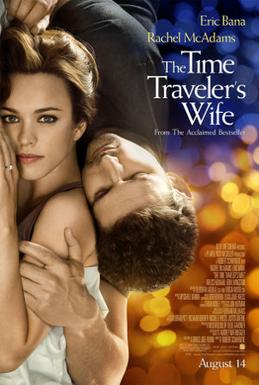 I’ve heard conflicting
opinions of the film adaptation of The Time Traveler’s Wife, from ‘it’s ok’ to ‘terrible’, and a variety of more
in-depth thoughts in between. I have to say (apparently controversially) that I
actually got quite caught up in the film, although I also agree with a
friend who said that it lacks the depth of the book. Some of that can be
excused as simply having to compress material into the timeframe available, but to me it
also felt rather sanitised.
I’ve heard conflicting
opinions of the film adaptation of The Time Traveler’s Wife, from ‘it’s ok’ to ‘terrible’, and a variety of more
in-depth thoughts in between. I have to say (apparently controversially) that I
actually got quite caught up in the film, although I also agree with a
friend who said that it lacks the depth of the book. Some of that can be
excused as simply having to compress material into the timeframe available, but to me it
also felt rather sanitised.SPOILERS AHEAD – if you haven’t read the book and don’t want important plot points revealed, stop reading this now. And go and read the book.
For those of you still with me, some of the exclusions that bothered me most were:
1) Kimy –
she kind of stepped into the space left by Henry’s mother in the book, and
without her his childhood background is pretty much a blank. Same with the rest
of the characters really, there isn’t much background for anyone in the film.
2) Ingrid –
her troublesome presence at the start of Henry and Clare’s real-time romance
gives the book a sense of reality and messiness. Without her to show the
negative impact of Clare’s appearance in his life, it all feels a little
convenient and fairy-tale-ish.
3) Clare and
Gomez’s attraction - again, without this, it’s too clean and convenient.
4) Henry’s
feet - or rather, the lack of them was lacking. I guess the amputation
could have been a little gory for translation to the screen, but they had no
problem showing the bullet wound, and there was no need to show the feet in
graphic detail. I found his amputation one of the most surprising and
significant turning points in the novel, so the film really lost something for
me by backing out on this one.
5) Henry and
Clare’s final meeting – for me, knowing that neither would meet the other again
until the very end of Clare’s life gave the finish an extra poignancy. The film
left it with the hopeful feeling that Henry might pop in at random to see them
at any time, which again feels like a bit of a cop-out.
Finally, not really an omission, but the focus of the film had changed to Henry, rather than Clare, who as the titular character, really should have stayed the main focus, in my view. I know that awareness is changing towards allowing female characters more screentime now, etc, and that if one character has some kind of ‘superpower’ type ability it guarantees they’re more interesting as far as Hollywood is concerned, but it seems a shame. The book really left you with the impression of a strong, loving relationship struggling against massive odds, whereas the film felt more like the biography of a guy who just happens to time travel.
That said, I enjoyed watching it, and admittedly it did make me cry like a little girl at the end.
What do you think? Do you disagree with any of the impressions above? Are there any other changes you liked or disliked? Leave a comment below!
Finally, not really an omission, but the focus of the film had changed to Henry, rather than Clare, who as the titular character, really should have stayed the main focus, in my view. I know that awareness is changing towards allowing female characters more screentime now, etc, and that if one character has some kind of ‘superpower’ type ability it guarantees they’re more interesting as far as Hollywood is concerned, but it seems a shame. The book really left you with the impression of a strong, loving relationship struggling against massive odds, whereas the film felt more like the biography of a guy who just happens to time travel.
That said, I enjoyed watching it, and admittedly it did make me cry like a little girl at the end.
What do you think? Do you disagree with any of the impressions above? Are there any other changes you liked or disliked? Leave a comment below!
Wednesday, 26 February 2014
The Time Traveller's Wife - Audrey Niffenegger
 You know
that sensation when it’s hard to think clearly about a novel because you still
feel lost in the world it creates? That's how The
Time Traveller’s Wife has me feeling right now. I have to admit that it’s
because of the film adaptation that I read it – I would probably never have
considered it if I hadn’t seen it plastered all over buses a couple
of years ago. The film looked interesting, and I always like to read the book
before I see a film adaptation, so I’ve been looking out for it since.
You know
that sensation when it’s hard to think clearly about a novel because you still
feel lost in the world it creates? That's how The
Time Traveller’s Wife has me feeling right now. I have to admit that it’s
because of the film adaptation that I read it – I would probably never have
considered it if I hadn’t seen it plastered all over buses a couple
of years ago. The film looked interesting, and I always like to read the book
before I see a film adaptation, so I’ve been looking out for it since.The Time Traveller’s Wife focuses on the relationship between Clare and Henry, as he struggles with his unusual condition of epilepsy-like time travel. That is to say, at any moment, particularly during times of stress, he may have a fit of sorts, disappear, and reappear in an unpredictable time period and location.
Niffenegger
deftly avoids creepy Humbert Humbert-like insinuations as Clare grows from a
child to a young adult with Henry as her frequent visitor, coming from different periods
of time in his own life. When they meet in real time, their life together is
sometimes happy, sometimes challenging, and occasionally heartrendingly painful,
but always believable and carries a sense of immediacy that has you feeling as
though you know the characters in real life.
I sometimes
find novels written in the present tense harder to get on with, but I think in
this instance it really works – where time travel is concerned, the present
tense really brings home the fact that this is happening, here and now, in the
present. While at first it feels a little slow, it gathers momentum as it
progresses, and you find yourself drawn in by the weight of inevitability as the story
draws to a close and all the pieces come together.
I’m still
not sure which genre it falls into – usually anything involving time travel can
be comfortably classed as ‘science fiction’, but Niffenegger takes the idea and
creates something wonderfully human and compelling. The Observer’s description on the cover, of The Time Traveller’s Wife as “an old-fashioned love story” made me
a little dubious at first, but it’s true, in the best sense – there’s no clichéd
sentimentality to be found, only two people struggling to come together and live a happy life in
spite of all their obstacles.
I can’t
compare it with the film because I haven’t watched that (yet – I plan to
redress this shortly), but I will say that, if you did enjoy the film, read the
book! And if you haven’t seen the film either, read the book anyway.
UPDATE: I have now watched the film!
Next up: The Complete Father Brown Stories, by G K Chesterton
UPDATE: I have now watched the film!
Next up: The Complete Father Brown Stories, by G K Chesterton
Thursday, 20 February 2014
Dark Fire - C J Sansom
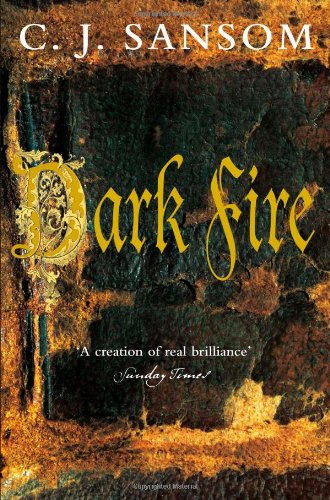
I have to admit that I have difficulty remembering which of Sansom's Shardlake series I've already read, which is why I'm reading the second novel after having already read the third (Sovereign) and fourth (Revelation). That's not to say that they're forgettable - anything but. I blame the short, slightly abstract titles - while they are all relevant to the action, I find I have to really think to figure out which plot was which from the titles alone.
Dark Fire is about the rediscovery of the deadly weapon, Greek fire, in Tudor London, with (as always) a murder investigation thrown in. Hunchbacked lawyer Matthew Shardlake navigates a political minefield, caught between Thomas Cromwell and the factions seeking his overthrow.
Sansom balances mystery, action and intrigue perfectly, with a tempo that draws you in and keeps you hooked throughout. At over 500 pages, this isn't a short novel, but it's one you never want to put down. He creates three-dimensional flawed but mostly likeable characters, even where historical cameos are concerned.
One of the things I really love about this series is the way the historical setting is conveyed - the descriptions have a really tactile quality which places you firmly in the bustling, stinking, dangerous city that is 1540s London, and contemporary events are integrated seamlessly. You never feel like you're having a history lesson, but you come away feeling as though you understand and have experienced life in that time in a way plain facts can never give. I find reading historical novels one of the most effective (and enjoyable!) ways to learn about history - on my masters course we were actually recommended Ellis Peters' wonderful Cadfael series as a way to learn more about Medieval legal administration.
Dark Fire definitely doesn't disappoint - it's gritty, engaging, and keeps you guessing right until the end, without the solution to the mystery being so convoluted you feel you never had a chance to figure it out. If you're a fan of history or mystery novels (you can tell I'm sleep-deprived because I find it very funny that that rhymes), I wholeheartedly recommend the entire Shardlake series. I've still got number five (Heartstone) to read, and am looking forward to it immensely.
Next up: The Time Traveler's Wife, by Audrey Niffenegger
Subscribe to:
Posts (Atom)