Showing posts with label Room. Show all posts

Monday, 29 September 2014

Guard Your Daughters - Diana Tutton


As this now out-of-print novel was lacking a blurb or cover illustration, I was expecting from the title for it to be something about an incorrigible Regency rake, or similar. I was definitely not expecting this to be a story about a family of five home-schooled girls just after World War II.

It opened with an alarmingly chirpy attempt at quirky humour, and for the first few chapters I thought it was going to be simply a warm, fluffy book about an eccentric family.  Something didn’t feel quite right, however – something dark lurked beneath the main character, Morgan’s, desperately bright laughter and her excessive affection and protectiveness towards her mother. Throughout the novel Mrs Harvey is treated as being delicate and in need of care – even a minor argument has her in bed for days, and she is completely housebound.

As the novel progresses we see just how insular and shut out of real life the girls are (especially contrasted with their older sister, Pandora, who has married and lives in London), and how much they yearn for even the slightest forbidden social contact with others.

In spite of the deliberately light-hearted tone (or perhaps because of it), I found Guard Your Daughters deeply unsettling. Looking at other reviews out there, it seems that it’s intended as a warm, emotional tale with a certain touching poignancy, but I really am unable to see past the tragedy of an entire family living stunted lives, and the most disturbing part, for me, is that the they seem entirely unaware of it, and perfectly contented. It made me think of Emma Donoghue’s novel Room, in which we see the story through the eyes of a young child who has never left the shed in which his mother has been imprisoned for the past few years.

So yes, I found it really quite bizarre and disturbing. It’s either an extremely clever and subtle exploration of mental illness affecting a family, or it’s an incredibly badly judged cosy comedy. I still can’t decide which.


Next up: The Castle of Otranto by Horace Walpole

Thursday, 13 February 2014

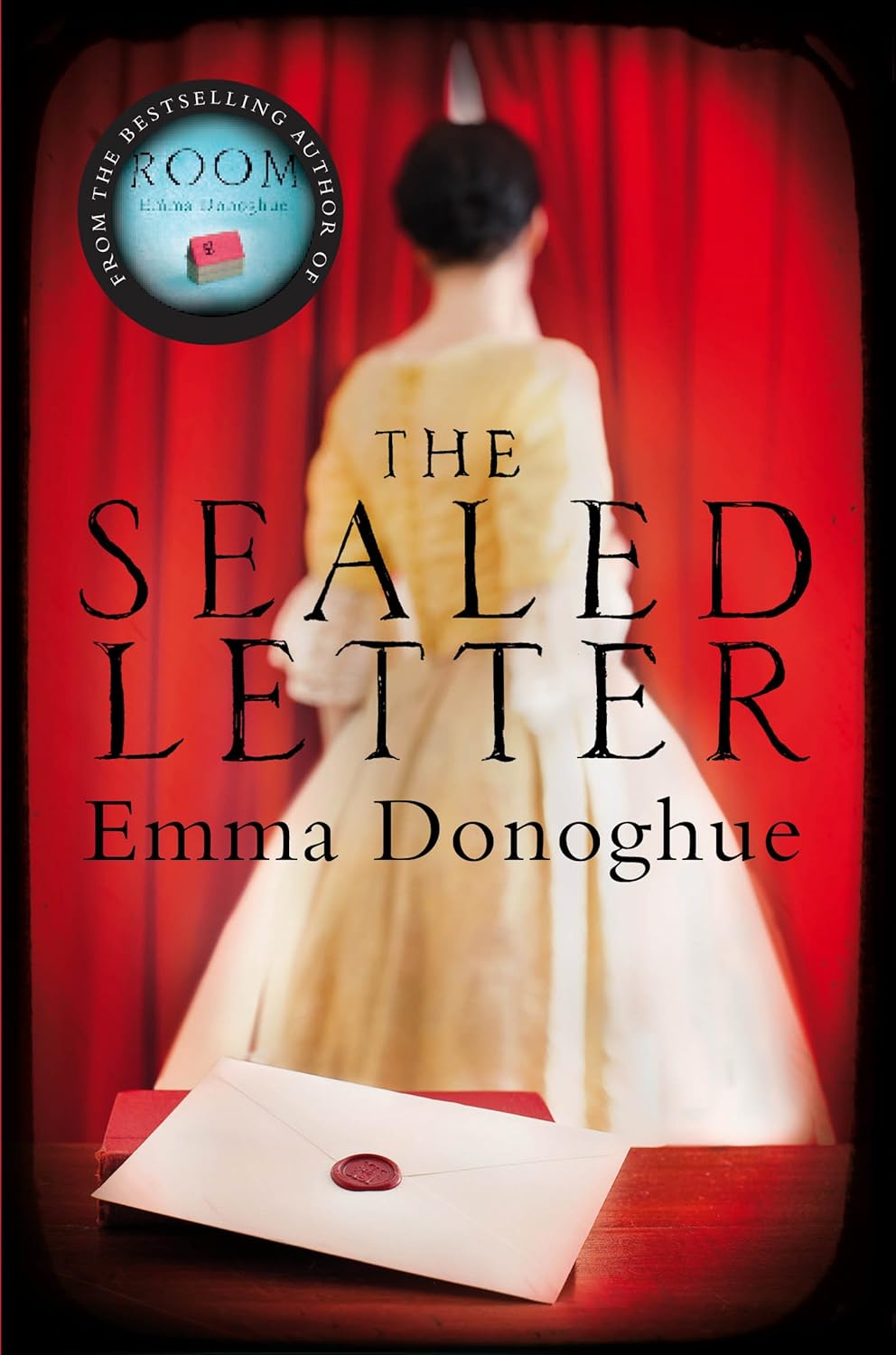
The Sealed Letter - Emma Donoghue


I read Emma Donoghue’s novel Room last year, and was surprised by how much I enjoyed it. Well, ‘enjoyed’ isn’t the right word for a novel about abduction and rape told through the eyes of the resulting child, but I did find it gripping, original and very touching. The Sealed Letter’s blurb, however, promised “a delicious tale of secrets, betrayal, and forbidden love”, based on real-life events in Victorian England, so I was expecting something very different here.

The central character, Emily ‘Fido’ Faithfull, bumps into Helen, an old friend she’s lost contact with, and gets drawn into Helen’s unhappy marriage and her affair with an army officer. Despite her reservations, Fido’s unspoken but deep-seated love for Helen leads her to become irrevocably embroiled in ensuing events.

Donoghue wrote this novel in the present tense, which always jars a little with me, but I got used to it pretty quickly. I’m still not convinced that the present tense and the modern, direct style of language used are completely successful in an historical novel – while the terminology and social assumptions give a good Victorian atmosphere, I personally find it more effective to have a novel written in the style of the time period in which it’s set.

The Sealed Letter is told alternately from the viewpoints of Fido, Helen, and Helen’s husband Harry, and Donoghue uses this very effectively to portray alternative perspectives on the same events and to get a different narrative voice for each character. The treatment of ambiguous sexuality is subtle and effective, and this novel manages to turn an historical court case into a very personal and engaging view of an unhappy marriage.

This is a very readable window into Victorian life, especially the unequal legal conditions that made the lives of women difficult, and, as long as you don’t mind the present tense too much, is well worth giving it a try if you are a fan of historical fiction.

Next up: Dark Fire, by C J Sansom