Thursday, 12 June 2014

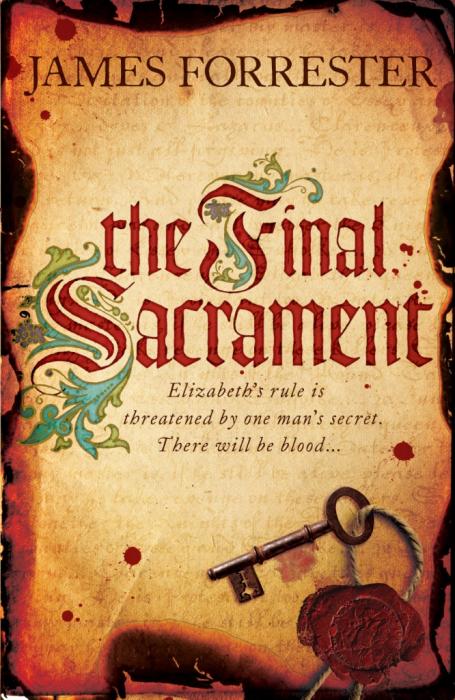
The Final Sacrament – James Forrester/Ian Mortimer


I know it’s taken a while to get through this one – for one thing, I started a new job, which means that I have more free time, but also that I’m actually doing stuff with my free time now, rather than reading on my own in a windowless office. Also, this book was a little difficult to get through.

It’s not a bad novel as such, I just found it hard to warm up to any of the characters, especially Clarenceux, the protagonist. They all feel a little two-dimensional, more like archetypes than rounded characters. It doesn’t help that Clarenceux spends the majority of the novel worrying, which is understandable, as he is trying to hide a pivotal document from important and powerful people while keeping himself and his family safe. However, it means that a mostly negative and slightly stressful feeling pervades the narrative – for me, the novel has too much grief and not enough in the way of happiness to make it really enjoyable.

Another issue in reading this was the strange way the viewpoint switches between characters. While it's told in the third person omniscient style, it’s more usual to either change viewpoints strictly between sections (à la George R R Martin) or to be a totally unbiased narrator, knowing everyone and everything (George Eliot, for instance). Mortimer, however, casually switches viewpoints within the space of a couple of sentences, and then returns to the original characters’ consciousness, which I found vaguely unsettling, rather like an out-of-body experience.

The back cover informs me that James Forrester is the pen name of historian Ian Mortimer, so I went into this one expecting a lot of historical detail. I wasn’t disappointed – this was where the novel really stood out for me. Mortimer’s intimate knowledge of Elizabethan life shines through in Clarenceux’s pride in his new glass windows, in the detailed description of a woman washing clothes, or in the food eaten at a Christmas feast. Where many novels would gloss over little details, we can really picture the minutiae of each scene, which not only adds very much to the atmosphere but also taught me new things about life at the time.

The downside of this is that Mortimer seems to expect his audience to be just as knowledgeable as he is on the subject of Elizabethan politics. The reader is thrown in at the deep end with a discussion between Queen Elizabeth, Francis Walsingham and William Cecil, with very little explanation of the background or motivations for each character. I am interested in history, but not to the extent that I feel so familiar enough with figures like Walsingham and Cecil that I don’t need an introduction to them, as you would with fictional characters.

That said, the momentum grew throughout the novel, and I found the ending genuinely touching. While some aspects of the prose lack finesse, The Last Sacrament is a well-researched and atmospheric novel, which left me feeling that I’d learned something at the end of it.


Next up: Shadow’s Edge, by Brent Weeks

Monday, 19 May 2014

Rumpole à la Carte - John Mortimer


This was my first foray into the Rumpole series, but I found that, apart from the occasional (footnoted) reference to the events of previous stories, it didn’t really spoil my enjoyment. Characters are introduced succinctly but enough that you get the gist of their personality, even if they’re new to you.

Rumpole’s narrative voice is slightly pompous, but benevolently sarcastic and willing enough to laugh at himself as well as others. It reminded me rather of P G Wodehouse, whose narrators manage to turn trivial events into amusing anecdotes. While each short story centres around the conclusion of a court case he’s involved in, the settings and characters vary enough to maintain interest, and the narrator remains likeable throughout.

It’s not the book to read if you’re looking for excitement, but it is a charming and amusing set of short stories, ideal to dip into with a cup of tea and guaranteed to leave you in a good mood.


Next up: The Final Sacrament, by James Forrester

Thursday, 15 May 2014

All the time in the world

This week's Booking Through Thursday is:

If you had all the time in the world, what would you read?

The obvious answer is: everything!

One thing I really want to get through is Robert Jordan's Wheel of Time series - I've got novels 1-7 and have only made it through the first two so far. Other than that, pretty much everything.

Thursday, 8 May 2014

Plot or characters?


This week’s Booking Through Thursday is:

Which is more important when you read — the actual story or the characters? I’ve read books with great plots, but two-dimensional characters, and I’ve read multi-layered characters stuck in clunky stories, and I’m sure you have, too. So which would you rather focus on, if you couldn’t have both?

The obvious answer is that both are important – a great novel wouldn’t be great without memorable characters and a plot to drive it along. If I had to choose just one, though, I think I’d go for realistic, three-dimensional characters, much as I hate reading Virginia Woolf and other purely character-based novels. Having interesting characters to get behind is such a vital part of a novel, though. Without that, you spend the whole time frustrated at the lack of them, and that spoils it even if it is a well-crafted plot. At least rounded characters who don’t end up achieving much is true to real life.

What do you think? Leave a comment below!

Sunday, 4 May 2014

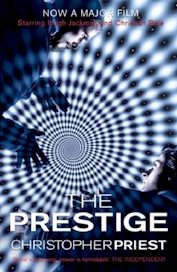
The Prestige - Christopher Priest


Having seen the film adaptation of The Prestige some years ago, I thought I knew what to expect from the book. I soon found out, however, that it was a rather loosely based adaptation, with the main characters and premise transplanted into an almost entirely different plot. Not that it wasn’t good – I remember enjoying it and being surprised by the ending, even if I had a lot of difficulty telling Hugh Jackman and Christian Bale apart.

Perhaps unsurprisingly, I have to say that I prefer the book – as with most film adaptations, a lot of depth was lost in translation to the screen. The novel is narrated by four different characters – two Victorian illusionists, and their modern-day descendants. With each retelling of events, we learn more about what occurred, and the differences in perspective between characters are clearly shown. The reader can also get a better insight into each character individually, as we read their views (in the form of dairies or notes, in the case of the illusionists), and it is interesting to see the parallels between the two men who make themselves sworn enemies.

It’s explicitly stated in the novel that Borden and Angier’s feud really is petty, and that both regret it at some point. For me, this adds a poignancy to the fact that they helped to ruin each others’ lives for no major purpose. The repercussions of the illusionists’ actions on their descendants 100 years later also frames the narrative in a way that (if I remember rightly) is lacking in the film.

The results of operating the device Angier has Tesla create for his magic trick are less melodramatic than in the film, but more spine-chilling for all that. Priest creates a hint of the unnatural as well as the scientific, evoking almost an H G Wells-like feel by the end as the full repercussions of Angier’s use of the machine are felt.

As I expected events to pan out the way they did in the film adaptation, parts of the novel were a genuine surprise to me. I realised after finishing that, as with any good magic trick, I hadn’t been given enough information to fully explain events, but that, in the midst of the action, I hadn’t even noticed.

Well worth reading if you’re a fan of the film, or even if you’re not. And if you enjoyed reading this, watch the film! It’s different enough that it’ll still surprise you.

Next up: Rumpole à la Carte, by John Mortimer

Saturday, 3 May 2014

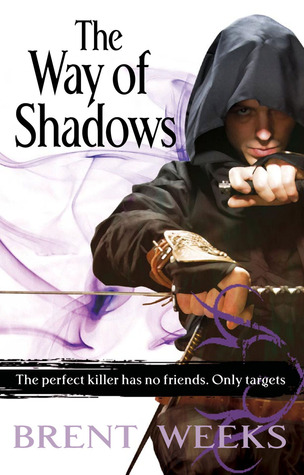
The Way of Shadows - Brent Weeks


This was one of those books you really can’t put down, and keep thinking about even once you’re finished.

Azoth is a young boy trying to survive in the brutal world of the slum guilds, who dreams of becoming a wetboy (assassin aided by innate magical ability) like the legendary and fearless Durzo Blint. He manages to get taken on as Blint’s apprentice, and grows up in a world of intrigue, suspicion and plotting in his new identity as Kylar Stern, dispossessed nobleman. We see Kylar/Azoth’s progression from vulnerable urchin to professional killer, and his struggles to keep those he loves safe in a dangerous world.

The only negative thing I could say about The Way of Shadows is that sometimes the wide range of cultures that meet in the novel result in so many different cultures, titles, regions, and legends coming together that it becomes difficult (or did for me) to remember all of them. That said, the rich and diverse background to the novel really does give a sense of the metropolis in which the novel is set. It’s quite possible the reason I had difficulty remembering things was because I did most of the reading on night shifts, where I was sleepy and frequently interrupted by the need to do work.

There is a wonderful intricacy in the way in which many different characters’ stories intertwine, and in the way the consequences of someone’s actions change the course of another character’s life. While the focus is on the protagonist, parts of the prose are written from other points of view, which adds to the sense of an interweaving pattern.

Throughout the novel the action is fast-paced and compelling, if vivid and gruesome at times. Plot twists and surprised leap out frequently, not just at the end, and the reader is drawn in, wanting to discover more. There’s an ambiguity to it that feels very human, rather than attempting to justify Kylar’s choice of career on a moral level to make him likeable as a character. It isn’t just a story about a boy becoming an assassin, it’s a story about hatred, love, cruelty, betrayal, and redemption, and it’s well worth reading.

Next up: The Prestige, by Christopher Priest